
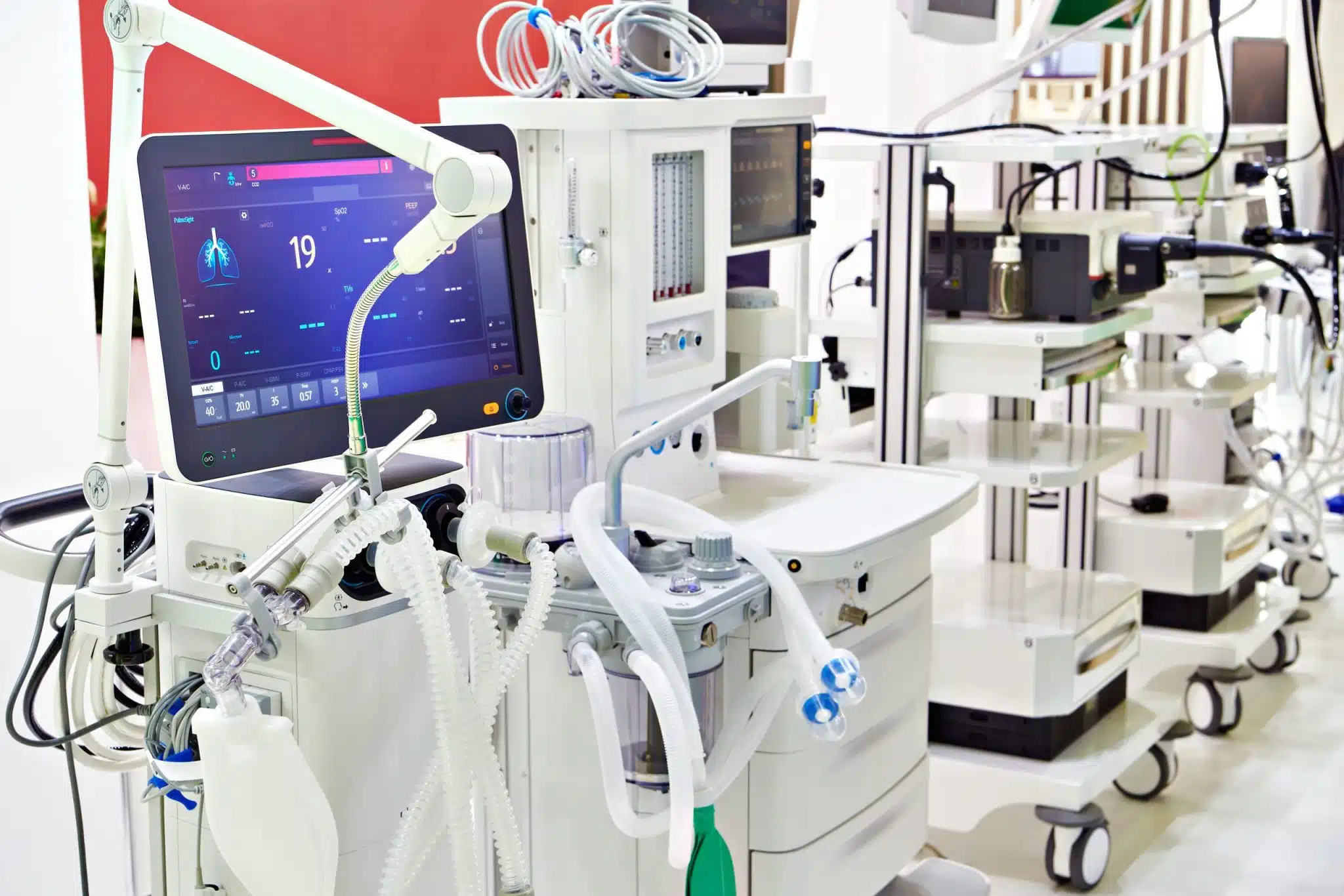
Diagnostic Housings
Enclosures around screens, controls and electronics.
MEDICAL DEVICE COMPONENTS
Tooling and molded plastic components for medical and diagnostic equipment where dimensional control, material requirements and documented sample validation must be defined clearly.
DFM Engineering · Export Tooling · Mold Trial · Plastic Injection Molding
TYPICAL APPLICATIONS
Support covers moldable components without implying device approval, cleanroom production or medical-system certification.
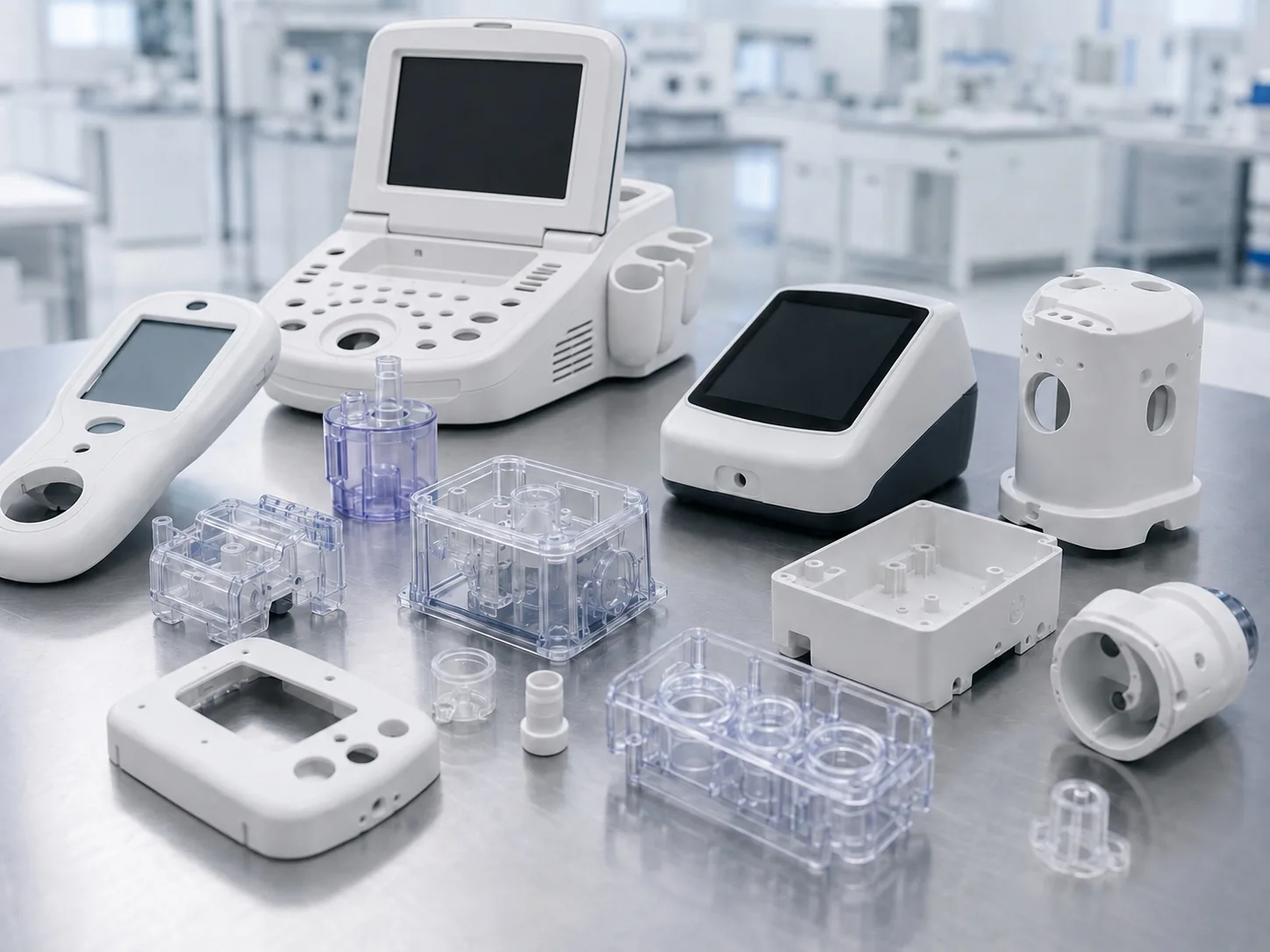
Enclosures around screens, controls and electronics.
Visible and structural covers used on equipment.
Controlled interfaces for replaceable modules.
Clear covers and windows with defined visual requirements.
Structures locating boards, sensors or functional modules.
ENGINEERING PRIORITIES
Review begins with customer-defined material, dimensional, appearance and validation requirements.
Identify interfaces controlling assembly or functional alignment.
Work from the exact approved supplier grade.
Protect polish, gate and weld-line requirements.
Review flatness and parting-line placement around defined seals.
Coordinate load, position and repeated assembly.
Agree dimensions, stages and report format before trials.
TOOLING & MOLDING
Tooling follows the supplied component specification and inspection plan; no regulatory or cleanroom claim is made.
Protect critical interfaces with stable inserts and datums.
Plan ejection around visible or sensitive areas.
Follow verified requirements for the selected grade.
Maintain sample identity where multiple cavities are used.
Connect mold changes with updated samples and results.
RELEVANT MOLD CAPABILITIES
Medical components can require precision, multi-cavity, insert and transparent-part tooling.
Controlled tooling for repeatable dimensions, assembly datums and stable production.
ExploreBalanced cavitation for repeated components and production output.
ExploreTooling for molded parts with integrated metal or functional inserts.
ExplorePolished tooling for clear covers and windows.
Explore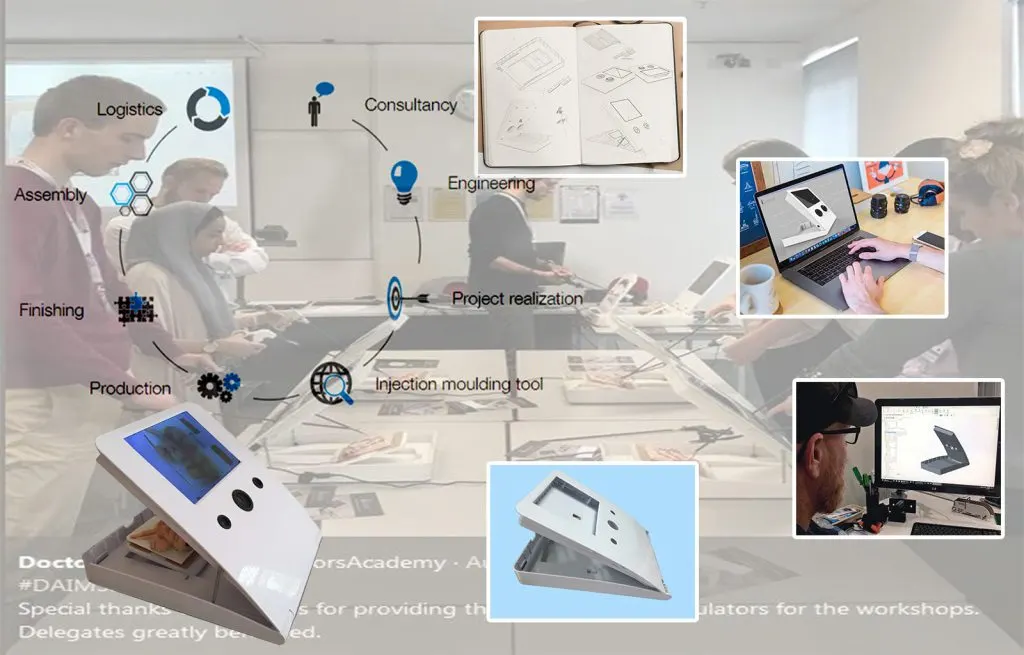
REAL APPLICATION EVIDENCE
A real product-development project showing the relationship between device housing geometry, internal interfaces and assembled-product requirements.
DFM TO PRODUCTION
Medical component programs move through requirements review, approved tooling data, controlled trials and documented validation.
QUALITY & VALIDATION
Inspection is based on customer drawings and agreed requirements; it does not imply regulatory approval of the finished device.
Record nominal, tolerance and actual results.
Review defined cosmetic and transparent surfaces.
Check mating parts, inserts and fasteners where available.
Identify sample results by cavity when applicable.
Retain parameters, observations and correction actions.
RELATED CAPABILITIES
Move from the industry application into the capability page that matches the project stage.
Export tooling developed around medical device component product, machine and validation requirements.
Engineering samples, low-volume builds and repeat molded-part supply after approval.
Review geometry, material intent, assembly interfaces and tooling risks before release.
Document samples, process conditions, inspection results and correction actions.
ENGINEERING RESOURCES
Use application-relevant technical guides to prepare geometry, materials and tooling requirements.
FAQ
Practical answers for engineering, sourcing and product teams preparing an RFQ.
Typical scopes include housings, covers, panels, cartridges, transparent parts and internal carriers.
No. This page makes no unverified ISO 13485, cleanroom or FDA claim.
Critical dimensions can be reported against customer drawings and an agreed scope.
Yes. Review covers exact resin, polish, flow path, handling and customer visual criteria.
MEDICAL COMPONENT RFQ
Upload CAD, drawings, exact material requirements, critical dimensions and validation expectations.