
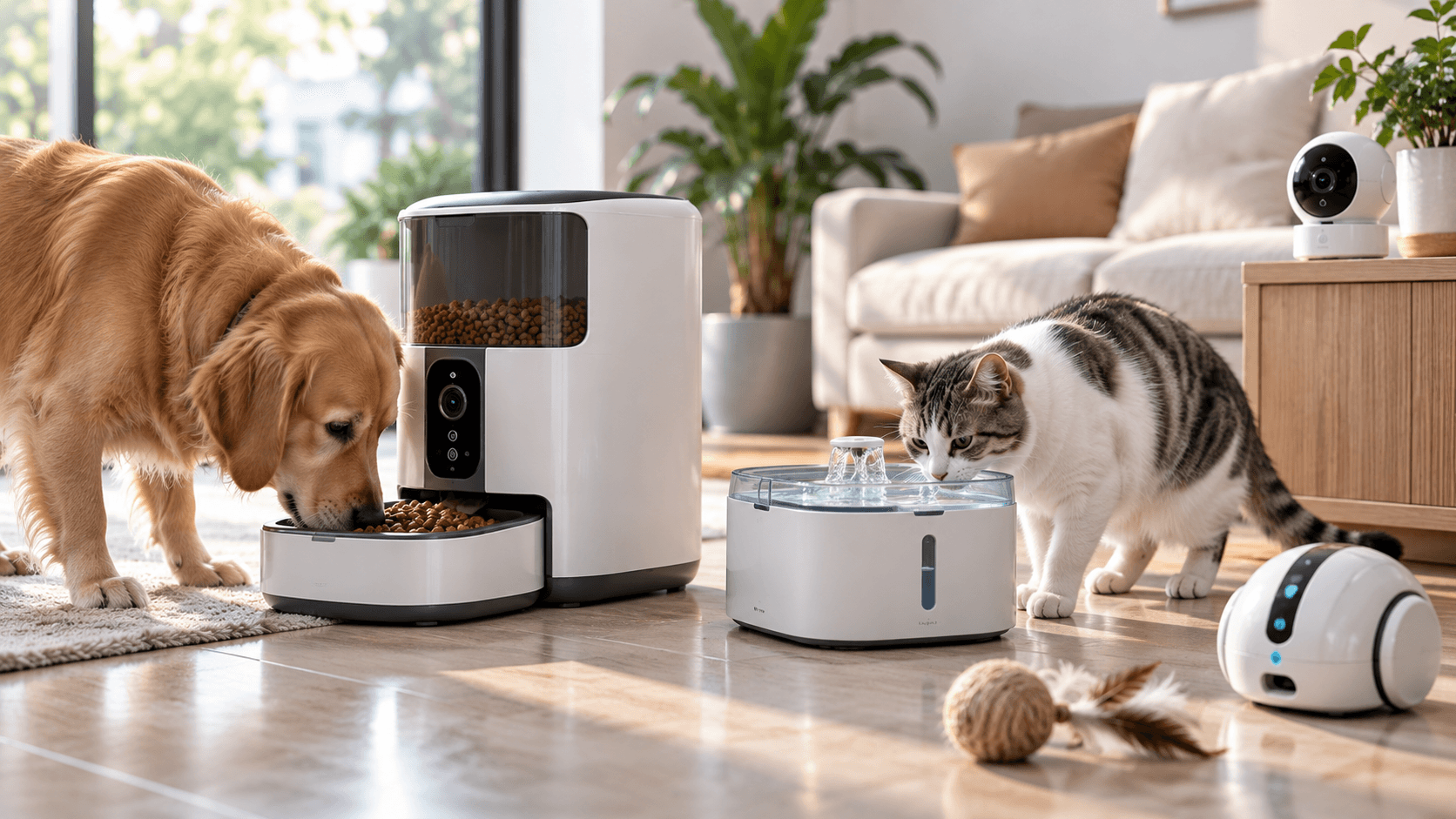
Smart Feeders
Housings, bowls, lids and dispensing parts around motors and sensors.
PET TECH PRODUCTS
Tooling and molded plastic components for smart feeders, monitoring devices and automated pet-care products where consumer appearance and functional assembly must work together.
DFM Engineering · Export Tooling · Mold Trial · Plastic Injection Molding
TYPICAL APPLICATIONS
Pet-tech programs combine consumer styling with moving, feeding, sensing or water-handling assemblies.
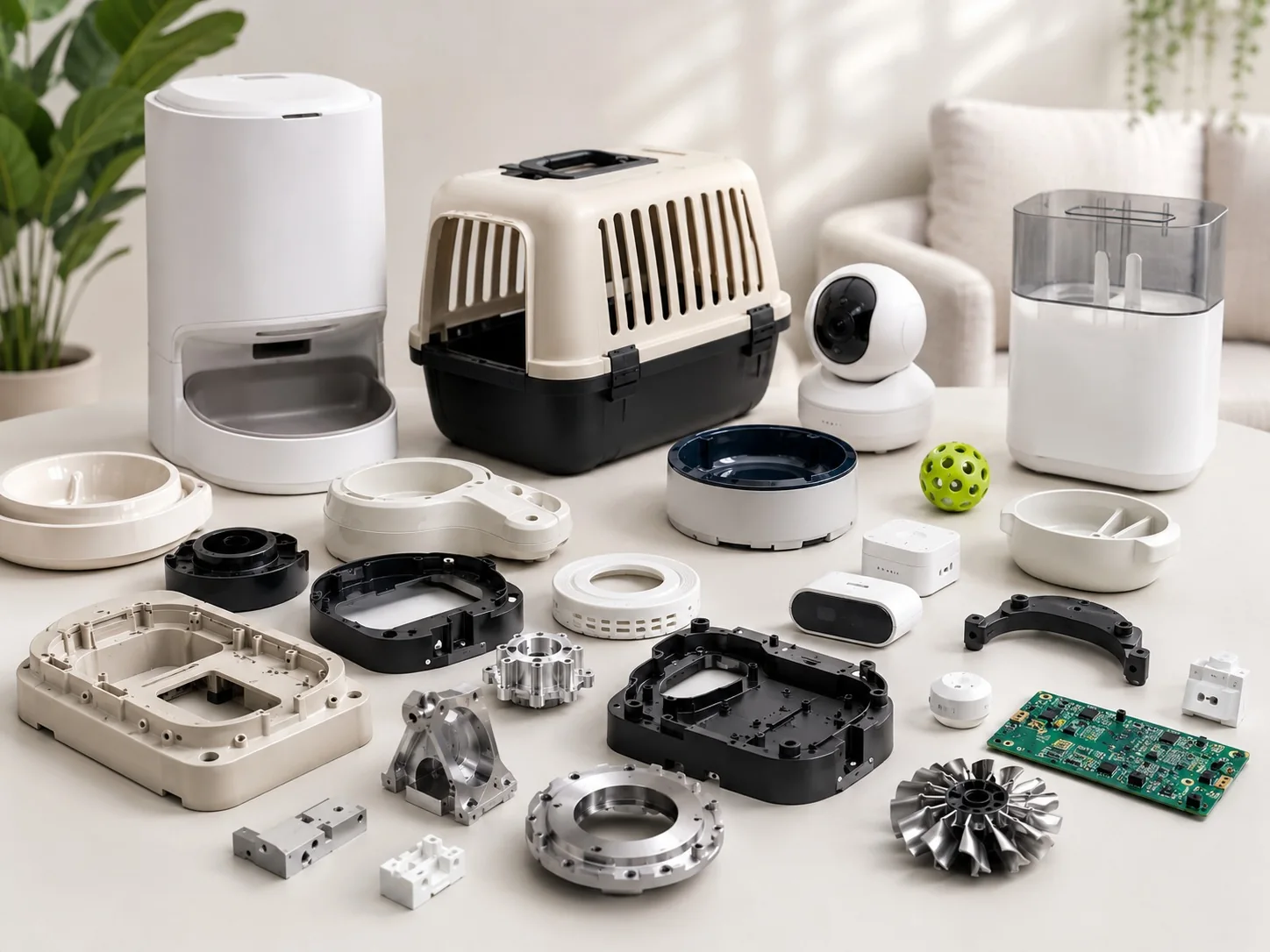
Housings, bowls, lids and dispensing parts around motors and sensors.
Reservoir, cover and pump-related components with defined interfaces.
Camera housings, bases and moving covers.
Frames, latches and sensor housings for controlled access.
Functional housings and carriers for motorized pet products.
ENGINEERING PRIORITIES
These products combine visible housings with moving mechanisms, removable cleaning parts and user-accessible assemblies.
Plan removable components and fasteners around intended cleaning.
Protect alignment, clearance and service access.
Define contact geometry without making unverified ingress claims.
Review mounting geometry around motors or pumps.
Control texture, color split, gates and witness lines.
Review exposed edges and openings against customer requirements.
TOOLING & MOLDING
Tool concepts account for multipart housings, removable components and functional geometry around mechanisms.
Balance gate location, walls and cooling across styled enclosures.
Review clearances and datums for lids, doors and dispensers.
Release ports, hooks and openings with serviceable actions.
Plan threads and metal features around use and assembly.
Validate representative subassemblies, not isolated parts only.
RELEVANT MOLD CAPABILITIES
Pet-tech products commonly use precision housing, complex-action, insert and large-component tooling.
Controlled tooling for repeatable dimensions, assembly datums and stable production.
ExploreCoordinated sliders, lifters and shutoffs for difficult release geometry.
ExploreTooling for molded parts with integrated metal or functional inserts.
ExploreLarge-format tooling for structural housings, covers and visible panels.
ExploreAPPLICATION EVIDENCE
An application-led view of housings, removable components and functional interfaces considered in pet-tech tooling.
DFM TO PRODUCTION
Pet-tech projects move from assembly-aware DFM through tooling, functional samples and approved production conditions.
QUALITY & VALIDATION
Validation reflects how molded parts interact with motors, sensors, removable components and the finished product.
Review covers, bowls, reservoirs, frames and modules together.
Check doors, lids and dispensing mechanisms through travel.
Inspect cosmetic zones, texture and witness marks.
Record interfaces controlling fit or mechanism position.
Confirm removable parts locate and reassemble as defined.
RELATED CAPABILITIES
Move from the industry application into the capability page that matches the project stage.
Export tooling developed around pet tech product, machine and validation requirements.
Engineering samples, low-volume builds and repeat molded-part supply after approval.
Review geometry, material intent, assembly interfaces and tooling risks before release.
Document samples, process conditions, inspection results and correction actions.
ENGINEERING RESOURCES
Use application-relevant technical guides to prepare geometry, materials and tooling requirements.
FAQ
Practical answers for engineering, sourcing and product teams preparing an RFQ.
Programs can include feeders, water devices, cameras, access products, trackers and automated-care housings.
Yes. Motor, sensor and mating-part data supports clearance and mounting review.
No. Any food-contact or compliance requirement must be defined and verified for the selected material and project.
Representative assemblies can be checked when mating components and acceptance criteria are available.
PET TECH RFQ
Send product CAD, mechanism data, material targets, assembly needs and expected volume for review.