
First-Shot Stability
Keep the first shot located and dimensionally stable during rotation or transfer.
Injection Mold Type
Two-shot tooling forms a first shot and a coordinated second shot within a specialized molding sequence to create an integrated multi-material or multi-color component.
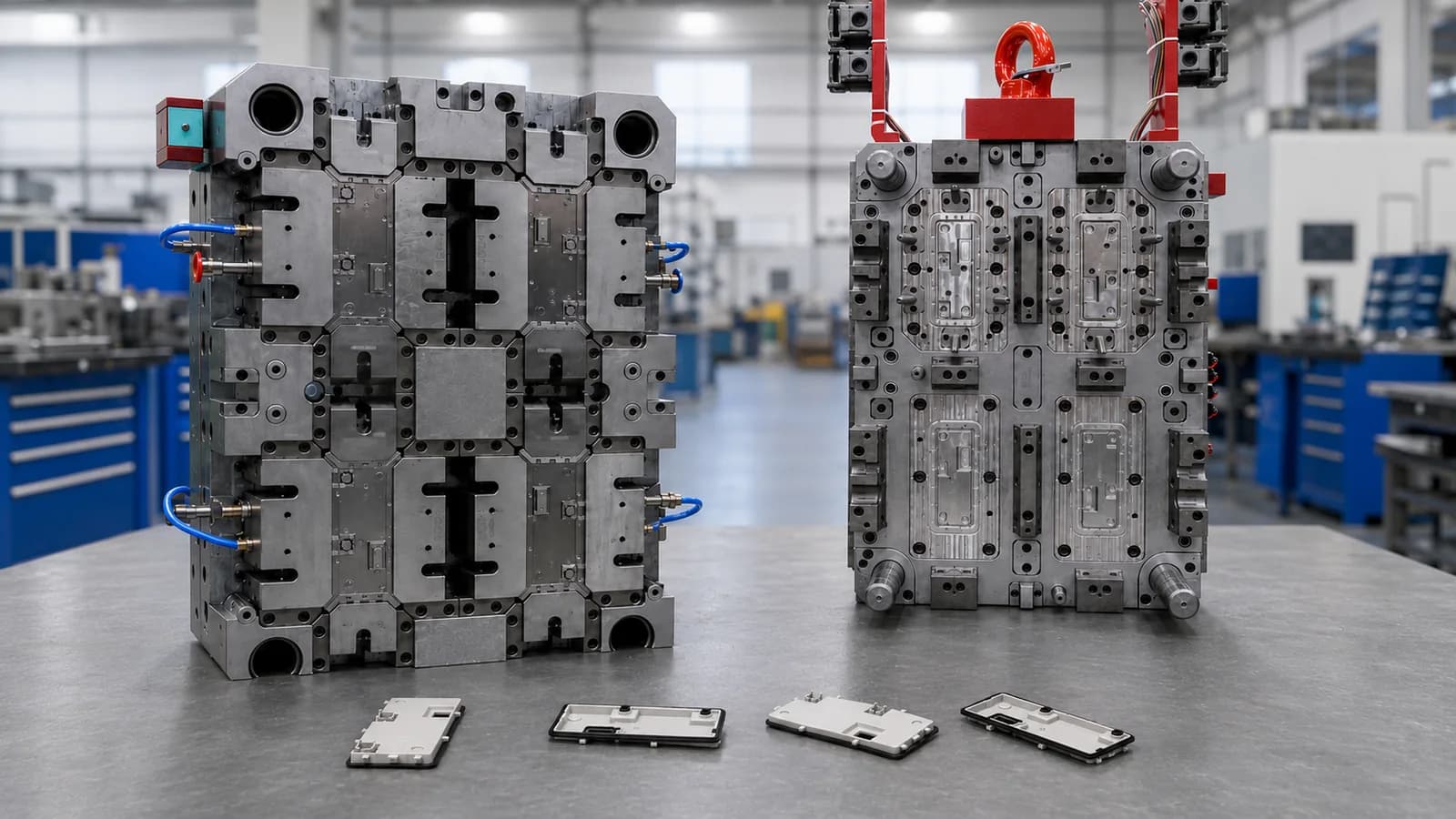
What Makes This Tooling Different
A 2K mold is engineered around machine configuration, rotation or transfer, first-shot retention and second-shot alignment. It differs from conventional overmolding because both shots are coordinated within one dedicated production sequence.
This tooling route should be selected from the part, material, production demand and receiving-machine requirements—not from a category name alone.
Selection Criteria
Two compatible materials or colors in one integrated part
Volumes that justify dedicated 2K tooling and machine setup
Parts requiring repeatable first-shot to second-shot alignment
Type-Specific Engineering
Keep the first shot located and dimensionally stable during rotation or transfer.
Review bonding, melt temperature, shrinkage and interface geometry.
Match index, rotary or transfer motion to the receiving machine and mold layout.
Control flash and appearance at the material transition.
Critical Tooling Topic
A 2K concept cannot be released without verified receiving-machine configuration and shot sequence.
Injection-unit arrangement
Rotary or index interface
First-shot orientation
Second-shot volume and process window
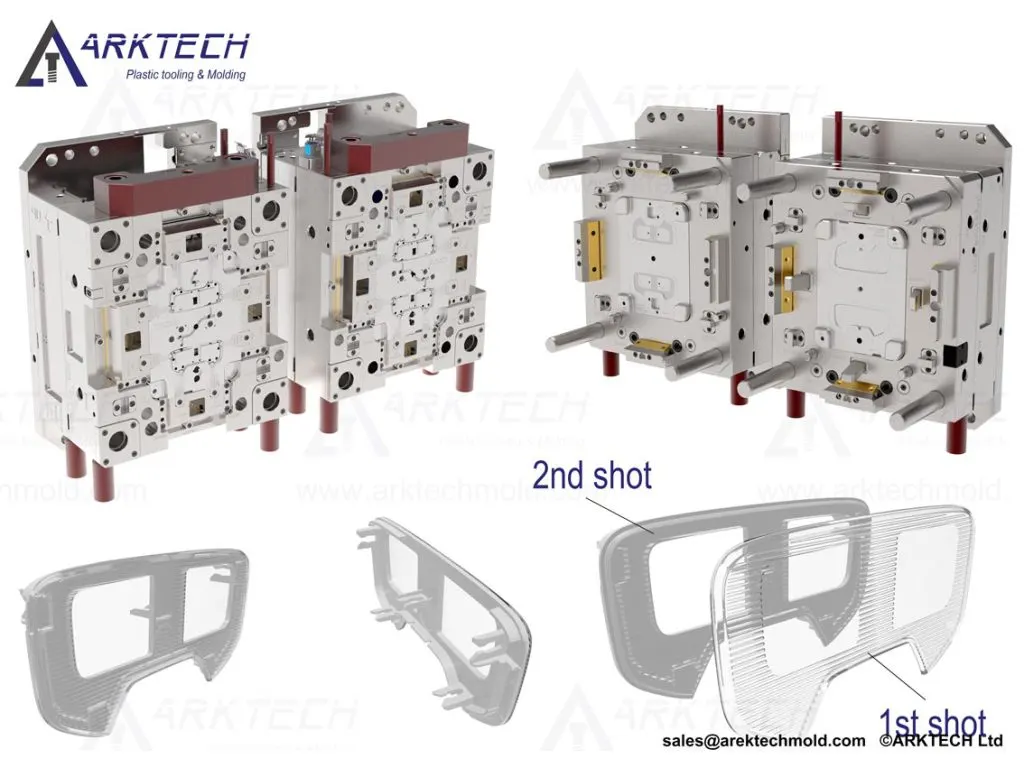
Real Engineering Evidence
The project image shows real first- and second-shot tooling with a molded light-cover component.
Trial & Validation
Inspect the interface between first and second materials.
Use project-appropriate adhesion or functional checks.
Review flash, transition lines, color boundary and surface condition.
Validate rotation or transfer, injection timing and ejection on suitable equipment.
Related Capabilities
Project Inputs
FAQ
2K molding uses coordinated first and second shots in a dedicated machine and mold sequence. Overmolding often loads a separate substrate into a second molding operation.
Injection-unit configuration, platen and tie-bar dimensions, rotary or index arrangement, shot capacities and utility interfaces should be confirmed before mold design.
Material data, bonding expectations, shrinkage and processing windows are reviewed before tooling; trial samples then confirm the actual interface and appearance.
Validation covers shot alignment, bonding, flash, color or material transition, dimensions, function and the complete machine sequence.
Start Your Tooling Review
Send your CAD data, material, volume and receiving-machine requirements for DFM review and tooling quotation.