

Device Enclosures
Upper and lower housings with controlled gaps, ports and mounts.
CONSUMER ELECTRONICS
Precision tooling and molded plastic parts for electronics enclosures, controls and structural components where appearance, compact assembly and production consistency are critical.
DFM Engineering · Export Tooling · Mold Trial · Plastic Injection Molding
TYPICAL APPLICATIONS
Support spans visible enclosures and smaller precision parts that locate electronics, controls and user interfaces.
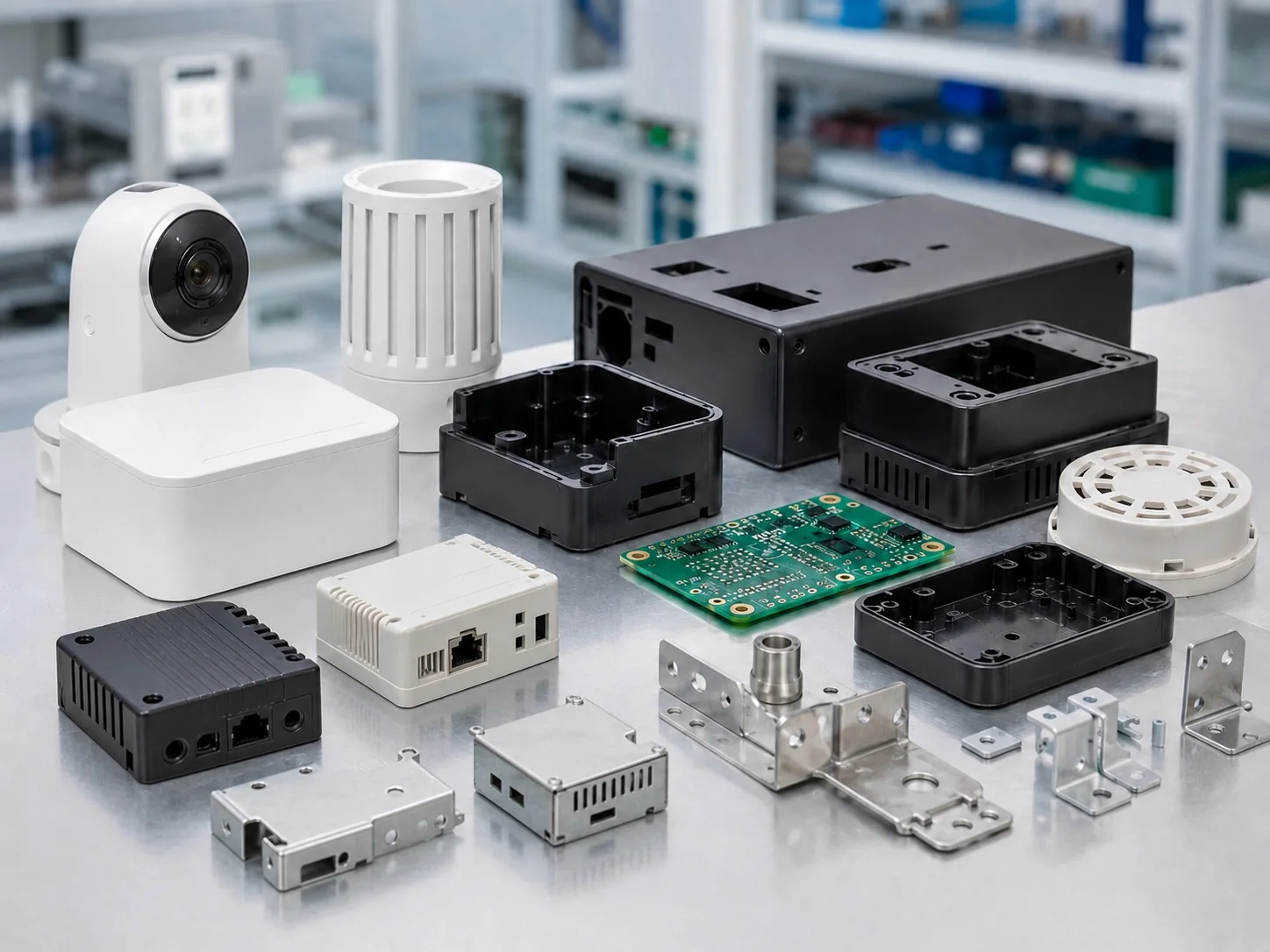
Upper and lower housings with controlled gaps, ports and mounts.
Visible frames around screens, lenses and touch interfaces.
Tactile or two-material controls requiring consistent geometry.
Ventilated enclosures for connected electronics.
Structures locating PCBs, batteries, connectors and modules.
ENGINEERING PRIORITIES
Compact products make every wall, boss, port and interface part of the assembly tolerance stack.
Review flow length, gates and restrictions before steel release.
Define acceptable parting lines, ejector marks and gate vestige.
Use real package data to protect internal space.
Plan threaded or functional inserts around load and location.
Balance open area, steel strength and release.
Coordinate resin handling, polish, flow and protection.
TOOLING & MOLDING
Tool construction focuses on appearance, compact features and repeatable enclosure assembly.
Place split lines around visible and closely fitted interfaces.
Review ports and vents for steel strength.
Assess 2K or overmolding against the real material pair.
Protect gloss and transparent zones through handling.
Maintain traceability where multiple cavities are used.
RELEVANT MOLD CAPABILITIES
Electronics programs can combine precision, 2K, overmolding and multi-cavity tooling.
Controlled tooling for repeatable dimensions, assembly datums and stable production.
ExploreMulti-material tooling for integrated interfaces, controls and visible features.
ExploreTooling for integrated grip, protection, sealing or multi-material features.
ExploreBalanced cavitation for repeated components and production output.
Explore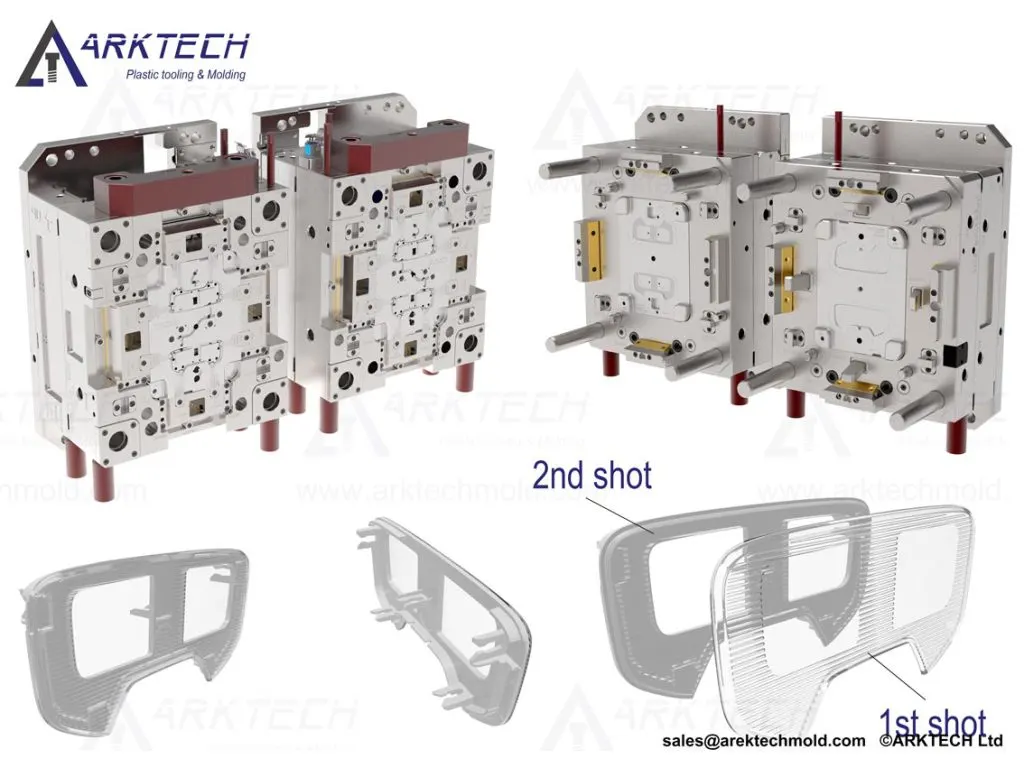
REAL TOOLING EVIDENCE
A real two-material tooling project demonstrating integrated clear and functional features for a visible electronic component.
DFM TO PRODUCTION
Electronics tooling progresses from package-aware DFM to sample approval with visible and functional interfaces checked together.
QUALITY & VALIDATION
Approval connects cosmetic criteria with PCB, connector, control and enclosure assembly requirements.
Review visible surfaces under agreed conditions.
Check gaps, flushness, snaps and fasteners.
Confirm ports, mounts, battery space and connector access.
Inspect flow features, gate vestige and clarity as required.
Compare repeated parts by cavity where applicable.
RELATED CAPABILITIES
Move from the industry application into the capability page that matches the project stage.
Export tooling developed around consumer electronics product, machine and validation requirements.
Engineering samples, low-volume builds and repeat molded-part supply after approval.
Review geometry, material intent, assembly interfaces and tooling risks before release.
Document samples, process conditions, inspection results and correction actions.
ENGINEERING RESOURCES
Use application-relevant technical guides to prepare geometry, materials and tooling requirements.
FAQ
Practical answers for engineering, sourcing and product teams preparing an RFQ.
Scopes include enclosures, bezels, controls, router housings, internal carriers and transparent features.
Concepts can be reviewed against the real material pair, geometry and production requirements.
Representative hardware supports review of bosses, ports, clearances and datums.
Transparent parts can be assessed around resin, polish, gate vestige, visual criteria and handling.
CONSUMER ELECTRONICS RFQ
Upload enclosure CAD, electronic-package data, material and finish requirements for review.