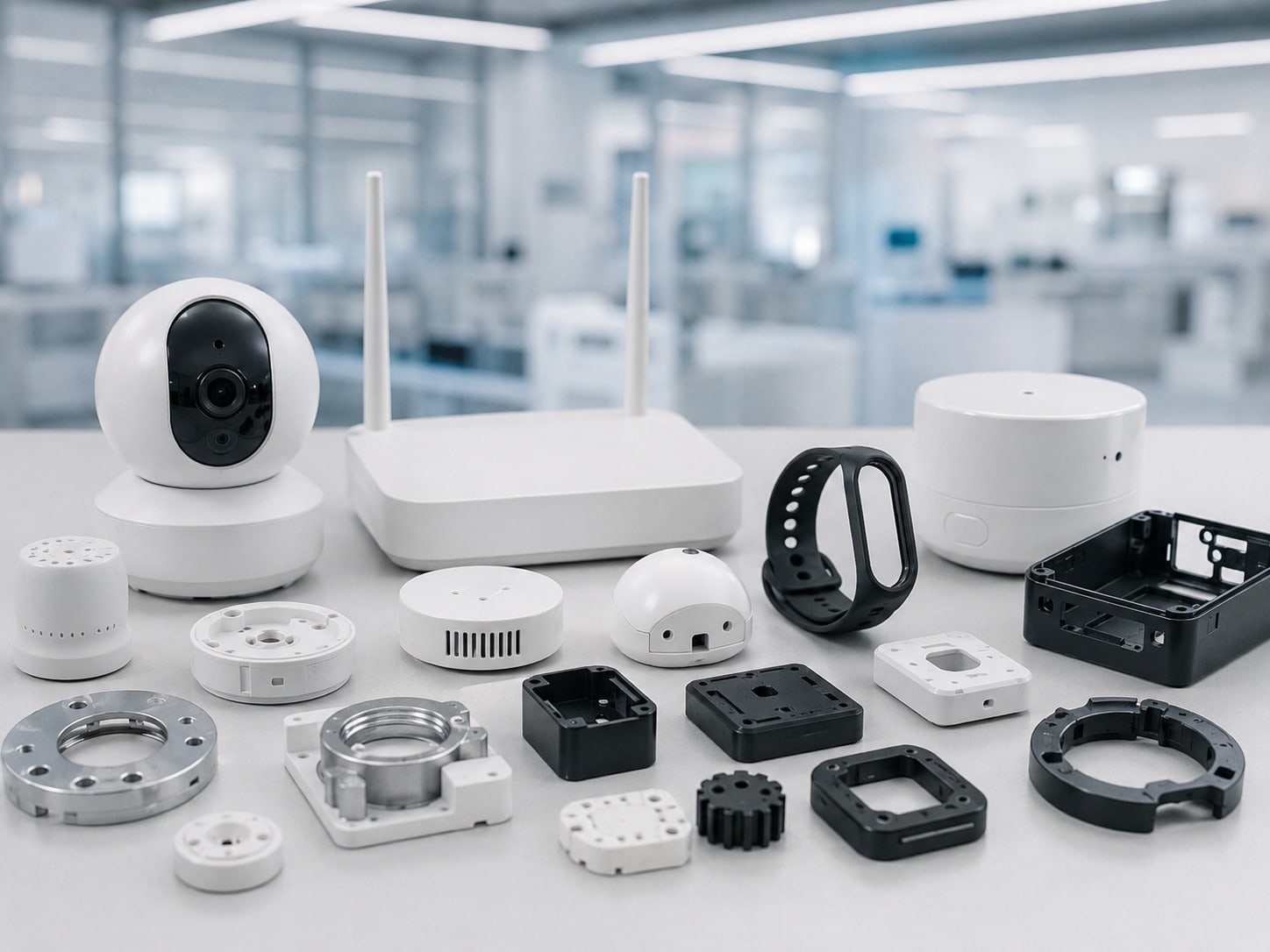
Controller Housings
Enclosures for controls, displays and industrial connections.
INDUSTRIAL AUTOMATION
Engineering, export tooling and molded plastic components for controllers, sensors and automation equipment where functional geometry and stable production are priorities.
DFM Engineering · Export Tooling · Mold Trial · Plastic Injection Molding
TYPICAL APPLICATIONS
Programs focus on functional housings and interfaces used around control, sensing, motion and factory equipment.
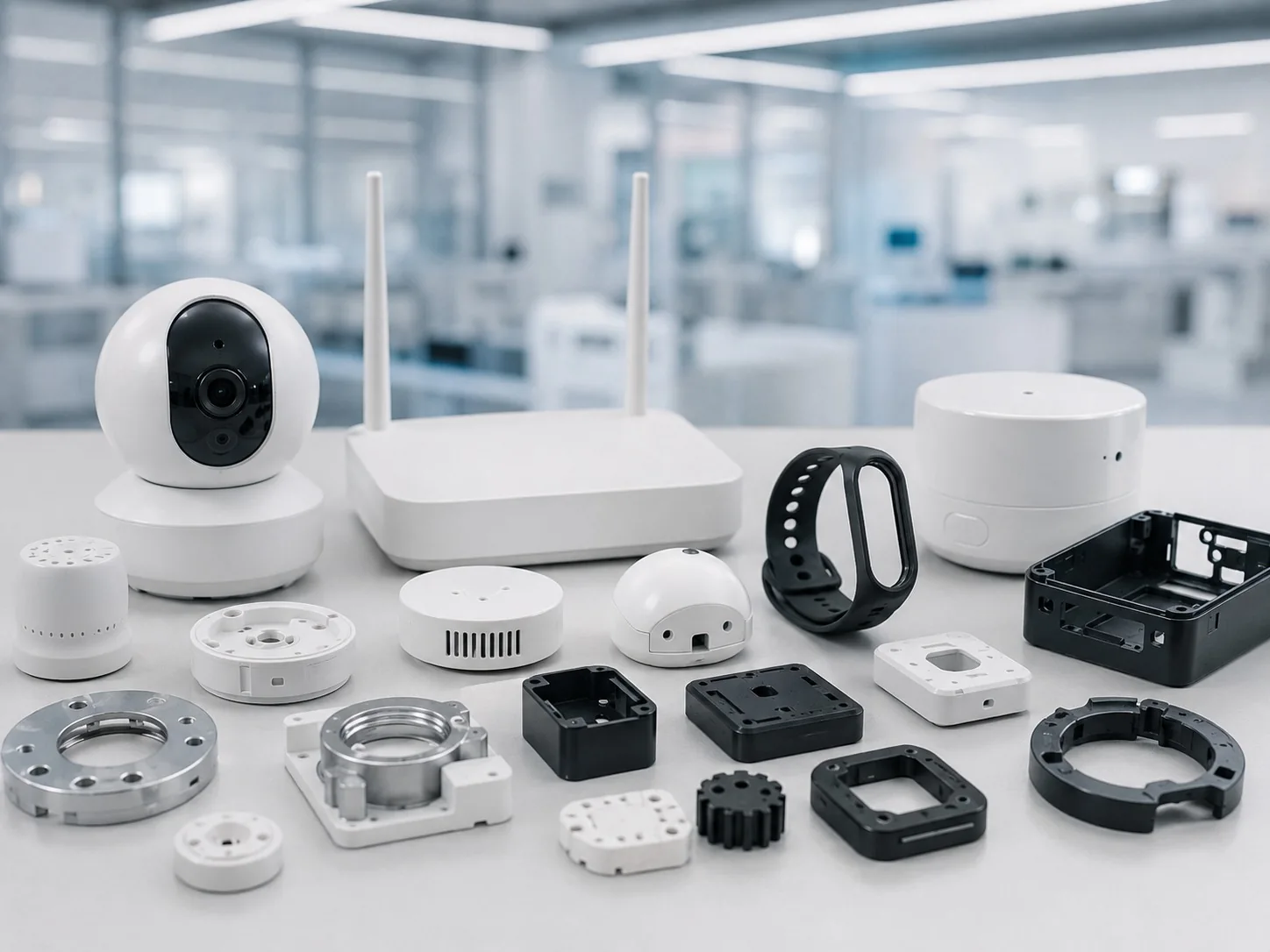
Enclosures for controls, displays and industrial connections.
Compact housings with cable and mounting interfaces.
Bezels and panels around operator controls.
Protective covers for actuators and moving assemblies.
Complex hub and blade geometry requiring coordinated release.
ENGINEERING PRIORITIES
Industrial parts combine functional geometry, reinforced materials, inserts and repeated service access.
Control interfaces locating sensors, boards or hardware.
Plan metal interfaces around torque and pull-out needs.
Protect bend, clearance and connector access.
Account for directional shrinkage and tool wear.
Resolve ports and hooks with robust tooling actions.
Review access around repeated maintenance.
TOOLING & MOLDING
Industrial tooling prioritizes durable mechanisms, replaceable wear areas and stable interfaces.
Model the complete motion path for side features.
Design high-contact areas for practical maintenance.
Define location and handling for metal features.
Manage local mass in structural housings.
Agree when material conditioning affects inspection.
RELEVANT MOLD CAPABILITIES
Automation parts can require complex-action, insert, precision and unscrewing molds.
Coordinated sliders, lifters and shutoffs for difficult release geometry.
ExploreTooling for molded parts with integrated metal or functional inserts.
ExploreControlled tooling for repeatable dimensions, assembly datums and stable production.
ExploreMechanically released tooling for molded threads and rotational undercuts.
Explore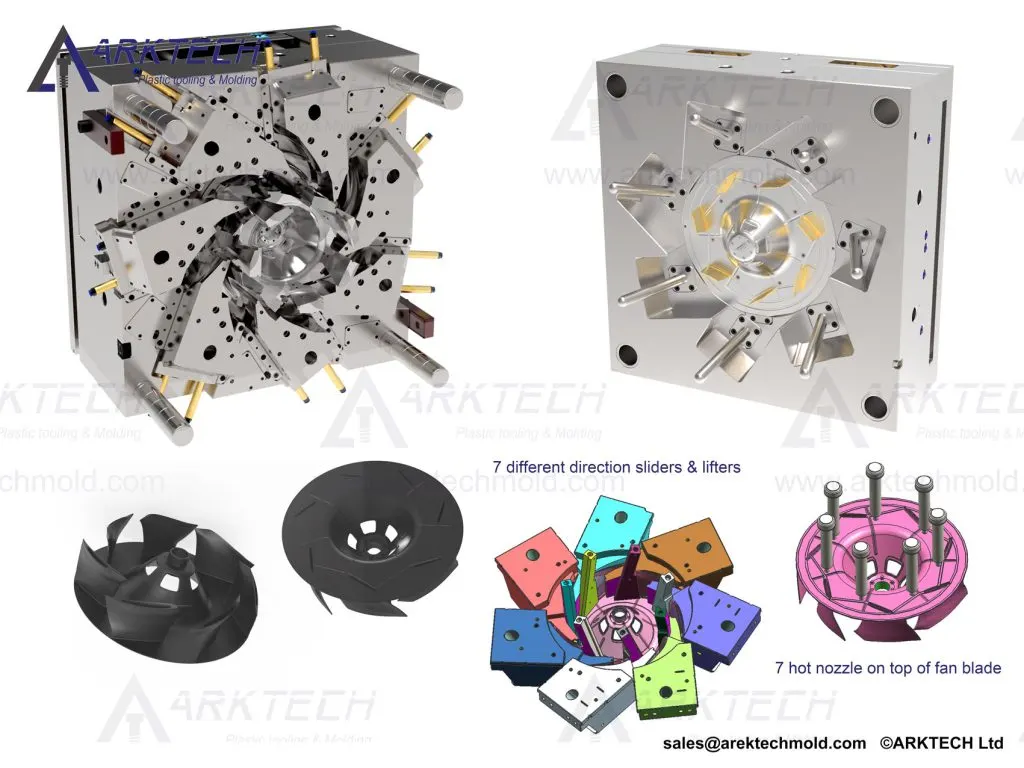
REAL TOOLING EVIDENCE
A real complex injection mold showing coordinated side actions used to release detailed fan-blade geometry.
DFM TO PRODUCTION
Automation programs connect functional DFM with serviceable tooling, controlled trials and assembly-aware approval.
QUALITY & VALIDATION
Validation centers on interfaces and mechanisms that determine fit, function and repeat production.
Inspect mounting, locating and movement-related features.
Verify metal-feature location and orientation.
Confirm actions through dry run and molding trials.
Review electronics, sensors and hardware where available.
Compare agreed conditions across samples and cavities.
RELATED CAPABILITIES
Move from the industry application into the capability page that matches the project stage.
Export tooling developed around industrial automation product, machine and validation requirements.
Engineering samples, low-volume builds and repeat molded-part supply after approval.
Review geometry, material intent, assembly interfaces and tooling risks before release.
Document samples, process conditions, inspection results and correction actions.
ENGINEERING RESOURCES
Use application-relevant technical guides to prepare geometry, materials and tooling requirements.
FAQ
Practical answers for engineering, sourcing and product teams preparing an RFQ.
Programs can include controller housings, sensor enclosures, panels, covers and functional parts.
Yes. The concept follows actual geometry, travel, steel, sequence and reliability requirements.
Insert molding or installed inserts can be reviewed against load, position and inspection requirements.
The exact grade is reviewed for drying, shrinkage, wear and conditioning.
INDUSTRIAL AUTOMATION RFQ
Send CAD, material grade, hardware interfaces, volume and destination-machine requirements.