
Interior Controls
Switch, button and control housings with visible and tactile requirements.
AUTOMOTIVE COMPONENTS
Export tooling and molded plastic components for automotive interiors, controls and functional applications where texture, dimensional consistency and repeat production matter.
DFM Engineering · Export Tooling · Mold Trial · Plastic Injection Molding
TYPICAL APPLICATIONS
Arktech supports component tooling without implying vehicle-level approval or certification.
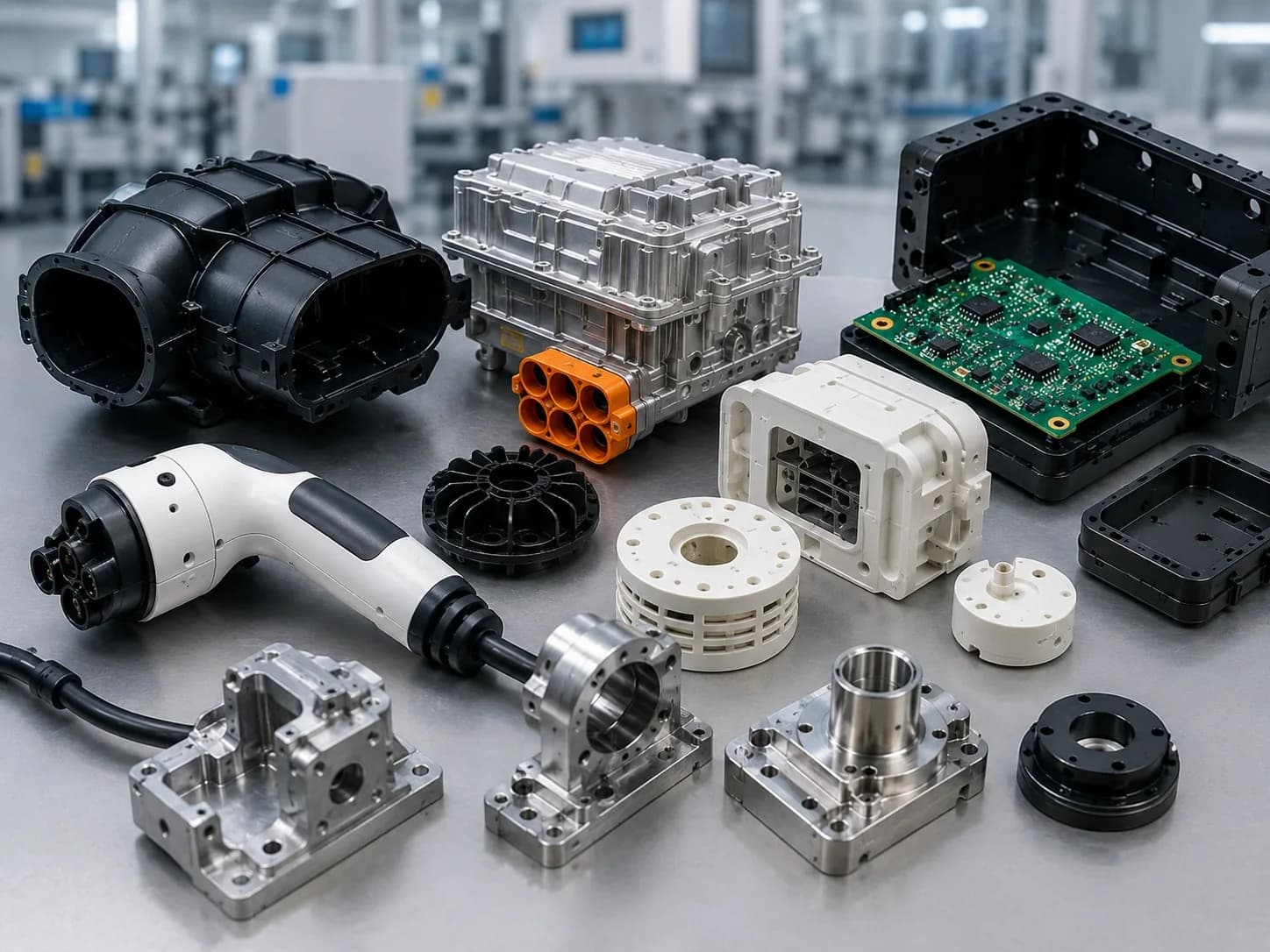
Switch, button and control housings with visible and tactile requirements.
Slats, frames and duct interfaces requiring controlled motion.
Appearance-critical frames, trims and control-panel parts.
Compact enclosures with connector and mounting interfaces.
Functional molded geometry around electrical and mechanical interfaces.
ENGINEERING PRIORITIES
Automotive components require project-specific control of visible surfaces, dimensional interfaces and repeated production.
Coordinate draft, split lines and gates with visible finish.
Protect mounting, connector and moving interfaces.
Confirm the exact material grade against service requirements.
Review stress, assembly direction and release.
Plan repeat production around balanced filling and traceability.
Use representative hardware to check gaps and motion.
TOOLING & MOLDING
Tooling is planned around supplied standards, destination machine, visible surfaces and validation scope.
Complete appearance and draft review before texture release.
Control sliders and shutoffs around clips and vents.
Validate filling and cooling across production cavities.
Use the confirmed supplier grade for tool offsets.
Align mold base and connections with destination equipment.
RELEVANT MOLD CAPABILITIES
Automotive programs frequently use multi-cavity, precision, complex-action and hot-runner tooling.
Balanced cavitation for repeated components and production output.
ExploreControlled tooling for repeatable dimensions, assembly datums and stable production.
ExploreCoordinated sliders, lifters and shutoffs for difficult release geometry.
ExploreRunner concepts reviewed around resin, gate location, appearance and volume.
Explore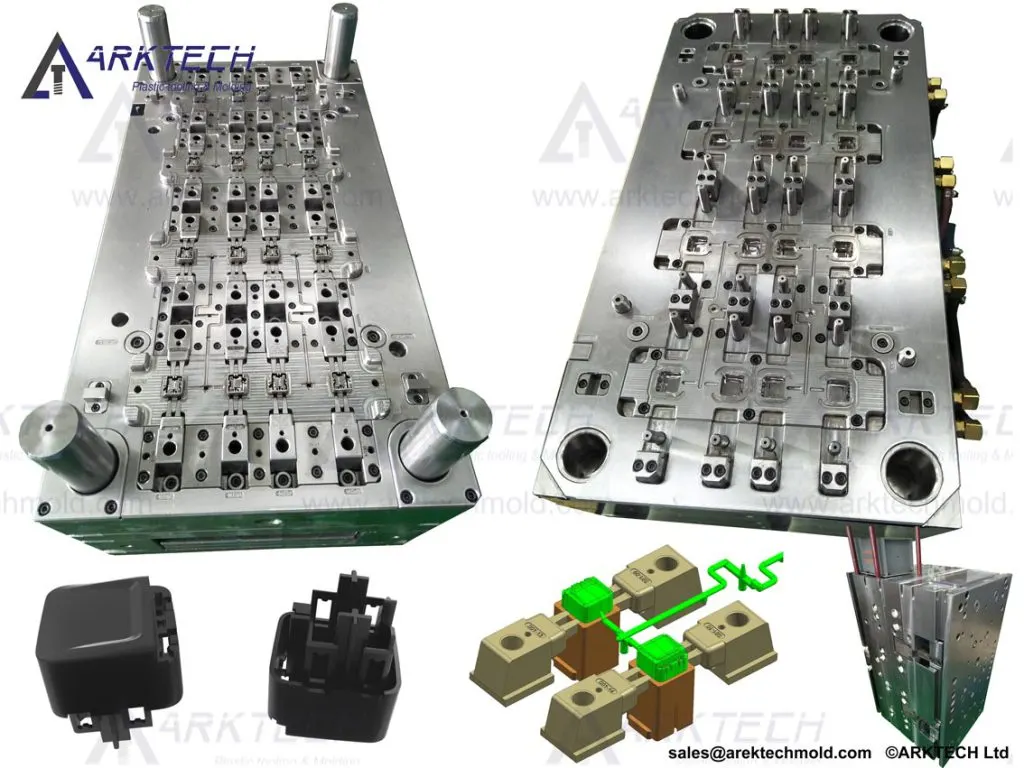
REAL PROJECT EVIDENCE
A real tooling project for repeated sensor-housing components with cavity balance and dimensional consistency at the center of validation.
DFM TO PRODUCTION
Automotive tooling progresses through requirements review, mold approval, cavity-aware trials and documented validation.
QUALITY & VALIDATION
Inspection follows the drawing and customer requirements; no unverified PPAP or IATF claim is made.
Keep measurements traceable to each cavity.
Review visible zones and allowable molding marks.
Check clips, mounts, connectors and moving features.
Record approved trial conditions.
Track actions and updated samples before release.
RELATED CAPABILITIES
Move from the industry application into the capability page that matches the project stage.
Export tooling developed around automotive component product, machine and validation requirements.
Engineering samples, low-volume builds and repeat molded-part supply after approval.
Review geometry, material intent, assembly interfaces and tooling risks before release.
Document samples, process conditions, inspection results and correction actions.
ENGINEERING RESOURCES
Use application-relevant technical guides to prepare geometry, materials and tooling requirements.
FAQ
Practical answers for engineering, sourcing and product teams preparing an RFQ.
Scopes include controls, vents, bezels, sensor housings, connector components and other functional parts.
No unverified IATF certification or PPAP service is claimed. Documentation is agreed per project.
Yes. Destination machine and plant standards should be supplied before approval.
Samples and measurements can be identified by cavity for balance and dimensional review.
AUTOMOTIVE COMPONENT RFQ
Share CAD, material grade, texture requirements, annual volume and destination-machine standards.