Part Structure
Wall thickness, ribs, bosses, radii and deep features.
Engineering Before Tooling
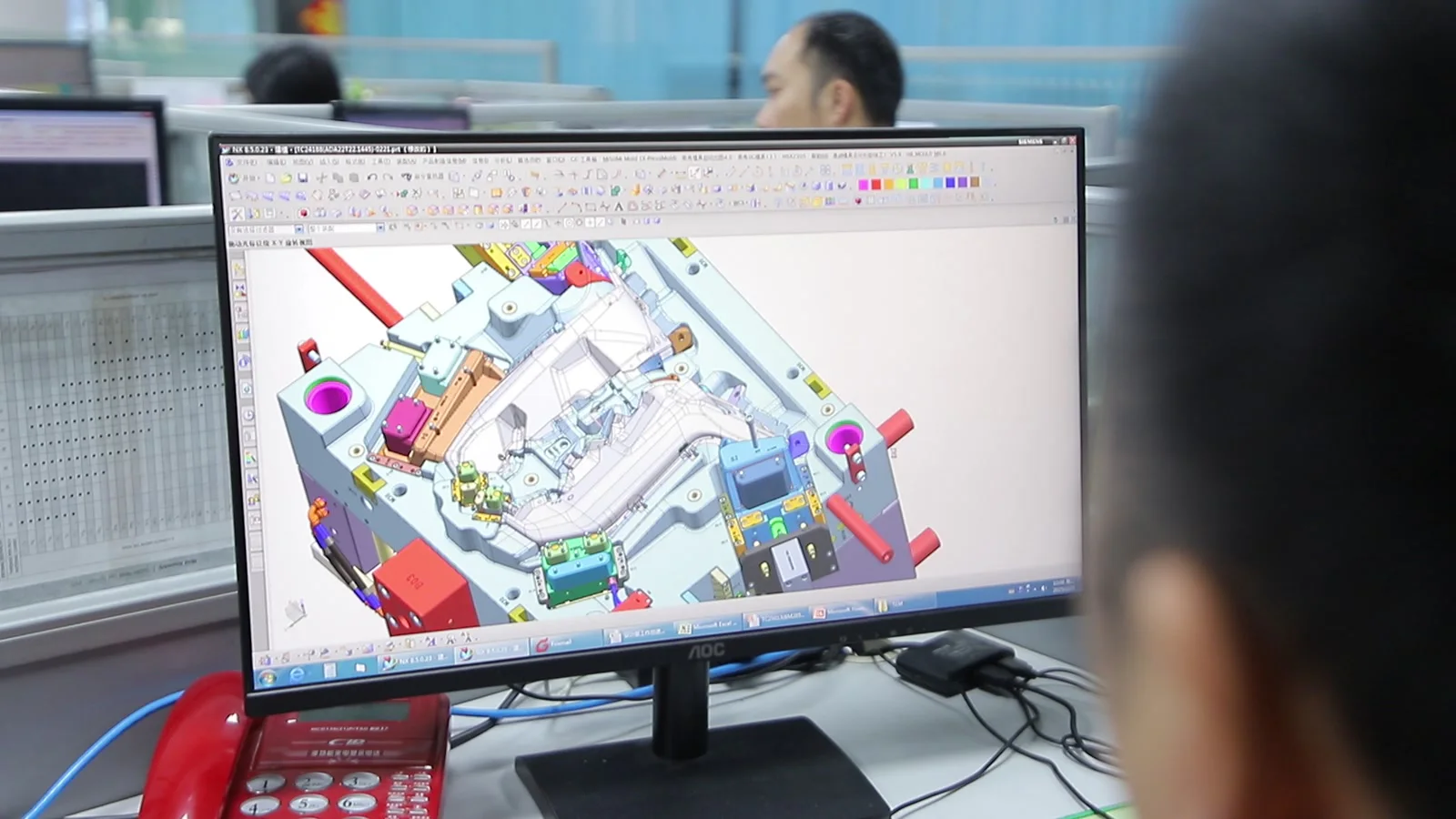
Review product geometry, moldability and tooling requirements with Arktech through co-design, DFM, Moldflow when required and mold design engineering.
Product Co-Design
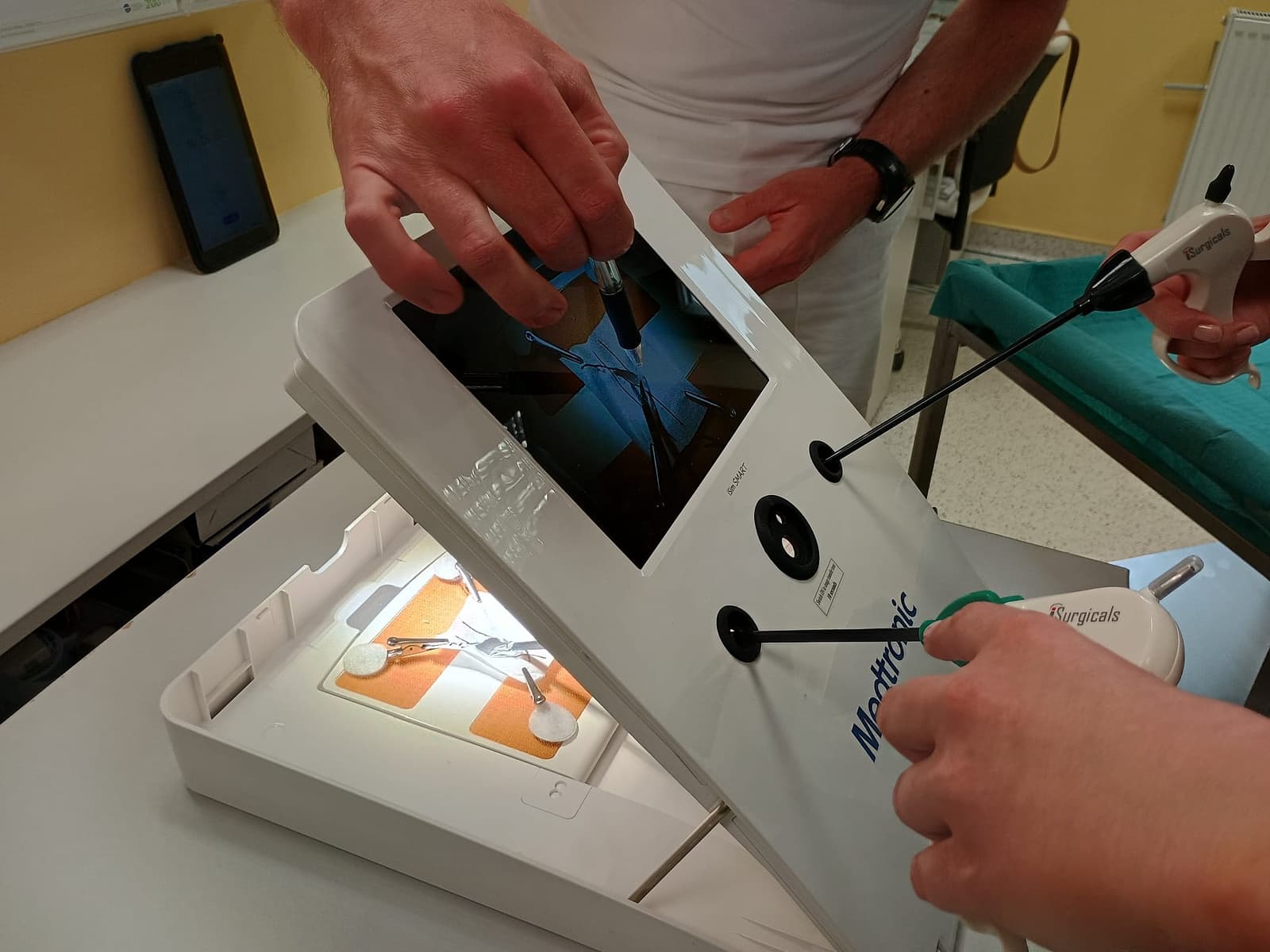
Before product design is frozen, Arktech can review part geometry, assembly, appearance and material requirements with your team, and discuss design recommendations before tooling decisions are finalized.
Wall thickness, ribs, bosses, radii and deep features.
Snap-fits, mating interfaces and critical functional areas.
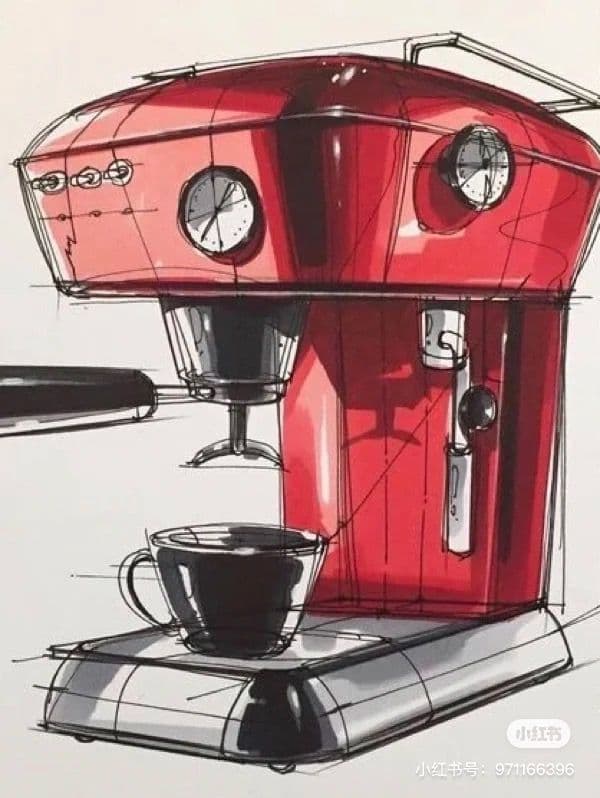
Cosmetic surfaces, texture zones and visible-surface requirements.
Material behavior, local mass, sink and warpage considerations.
Recommendations are reviewed with your team; final product-design approval remains with the customer.





DFM & Moldability
Before mold design begins, the part is reviewed for manufacturability, mold release, gating, ejection, appearance and tooling risks.
The review connects product geometry with practical tool construction. Findings are documented so open decisions can be discussed before the mold concept is released.
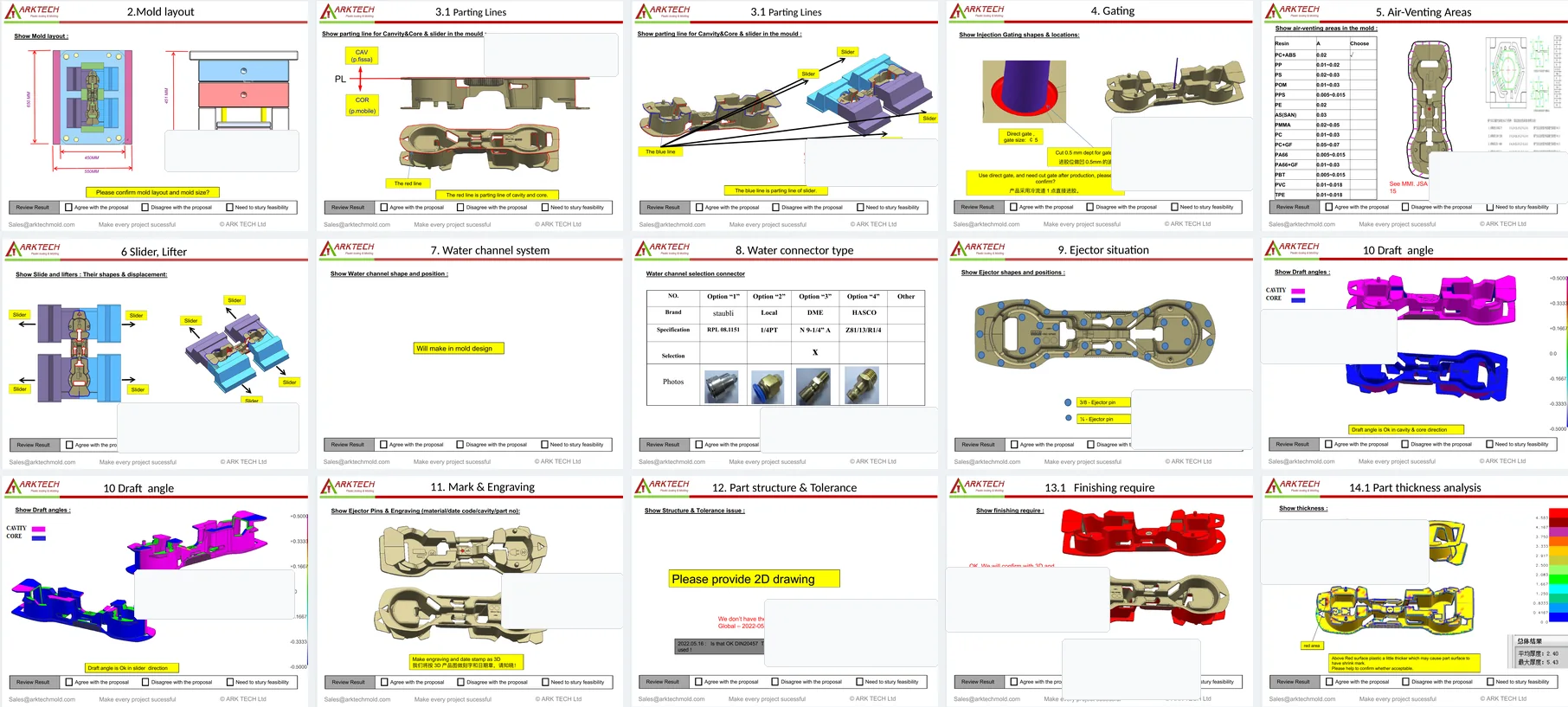
Engineering Review Scope
Six connected review areas help the customer and tooling team resolve product, moldability and mold-concept questions before steel cutting.
Material & Tolerance
Material requirements, critical dimensions and assembly fits are reviewed against the intended function, molding behavior and agreed inspection requirements.
Resin grade, use conditions and material requirements supplied for the project.
Shrinkage and dimensional considerations based on the selected material and part geometry.
Customer drawing tolerances, mating interfaces and function-critical dimensions.
Measurement references and acceptance requirements agreed for critical features.
Feasibility and open requirements are reviewed with the customer before tooling decisions are finalized.
Engineering Deliverables
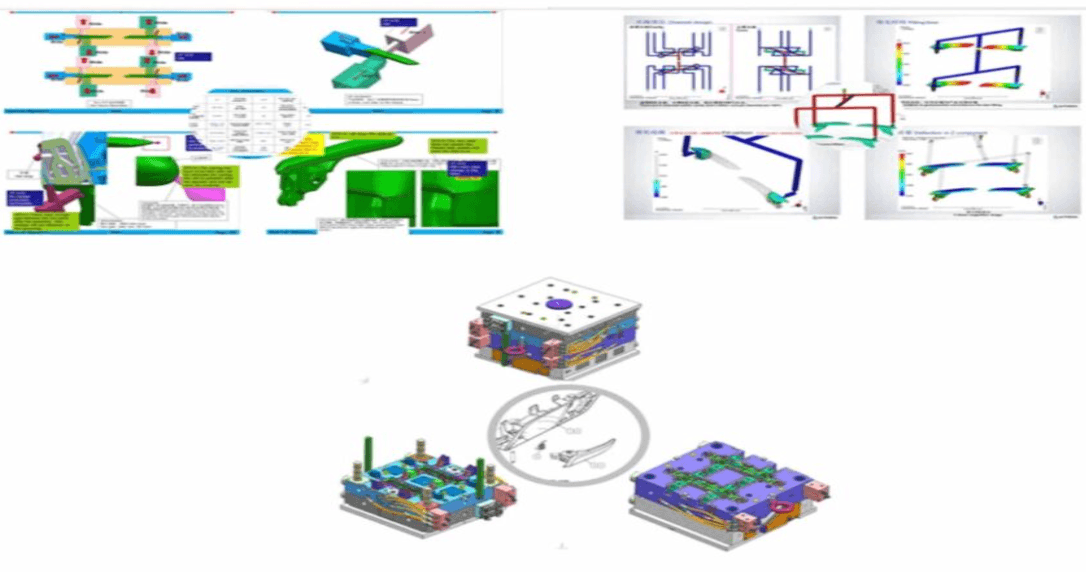
The actual deliverables depend on project scope. Real engineering records are used to document moldability findings, tooling concepts and open decisions for customer review.
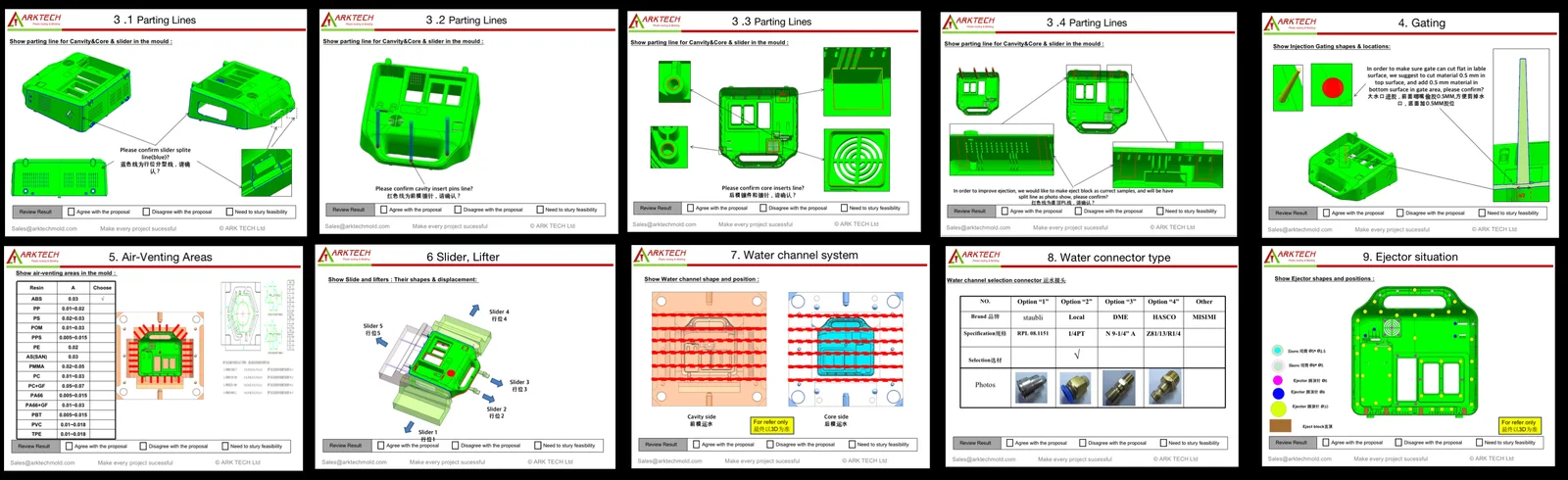
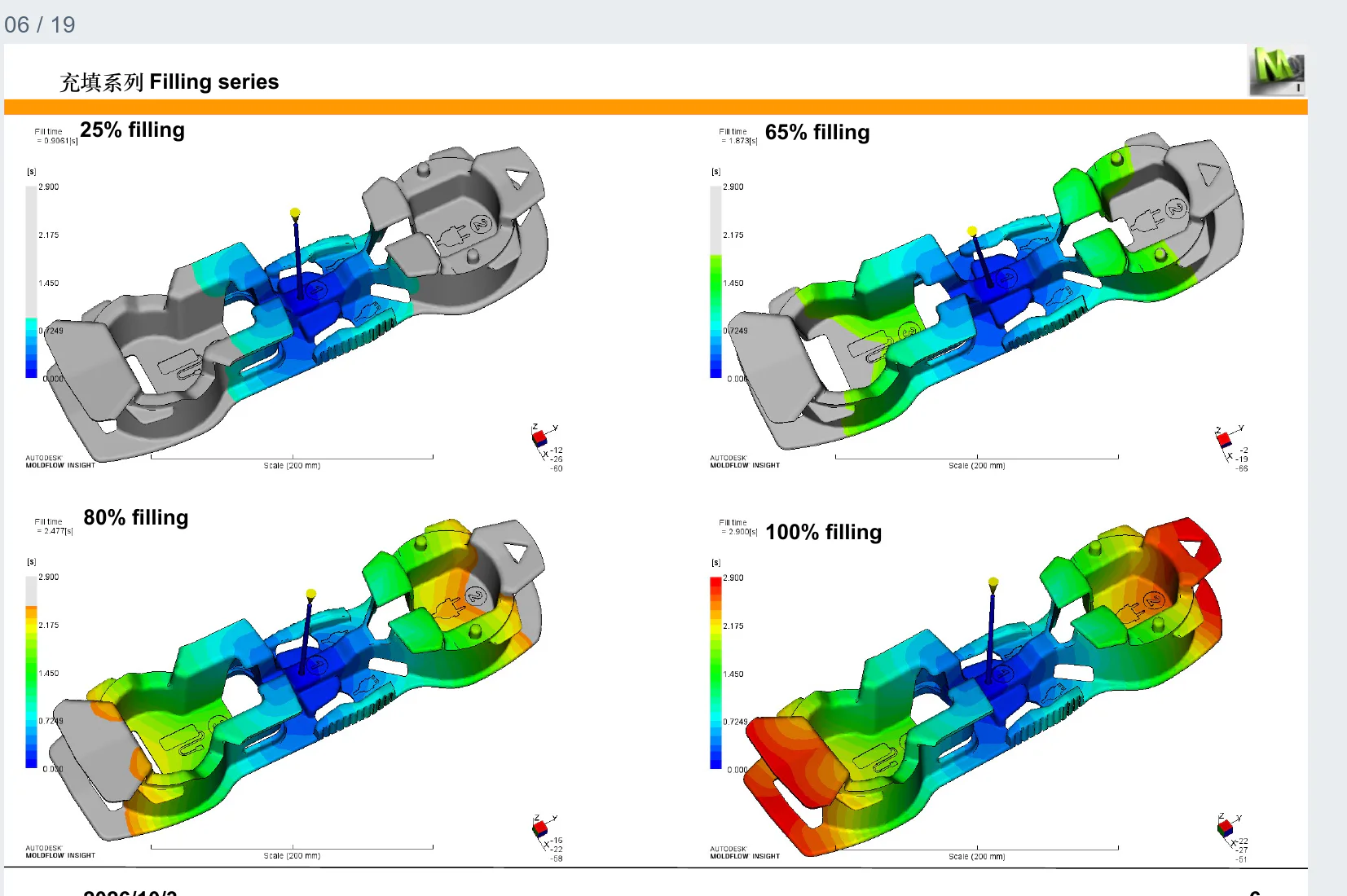
Moldflow When Required
Moldflow analysis can be used when filling behavior, pressure, weld lines, air traps, warpage or other process risks require deeper simulation.
Simulation scope is selected around the part, material and tooling risk. Moldflow is not presented as a mandatory step for every project.
Engineering Decisions
The examples below show how an engineering risk is translated into a review focus and an agreed direction before detailed mold design.
risk
Heavy rib, boss or wall intersections can create uneven cooling and visible sink.
review
Evaluate local mass, parent-wall relationships and functional load paths.
decision
Core out or rebalance the geometry while preserving required function.
risk
Features outside the mold-opening direction can prevent clean part release.
review
Confirm pull direction, shut-offs and the practical mold-action options.
decision
Revise geometry or define a slider, lifter, insert or unscrewing concept.
risk
Gate position and flow direction can affect vestige, weld lines, air traps and cosmetics.
review
Review material, flow length, appearance zones and assembly requirements.
decision
Define a gating concept and use Moldflow when deeper filling analysis is required.
Engineering Workflow
The review sequence connects product requirements, engineering decisions and mold design release, with customer or engineering confirmation as required before steel cutting.
CAD & Requirements
Product / DFM Review
Moldflow When Required
Engineering Decisions
Mold Concept
Customer / Engineering Confirmation
Mold Design
Steel Cutting
Mold Engineering
After the product and tooling concept are reviewed, the engineering process moves into detailed mold design for manufacturing and validation.
Core and cavity layout, parting, shut-offs and cavity arrangement
Gate, runner and hot-runner considerations around the confirmed part
Slider, lifter, unscrewing, insert and ejection mechanisms where required
Cooling concept, machine compatibility and trial requirements
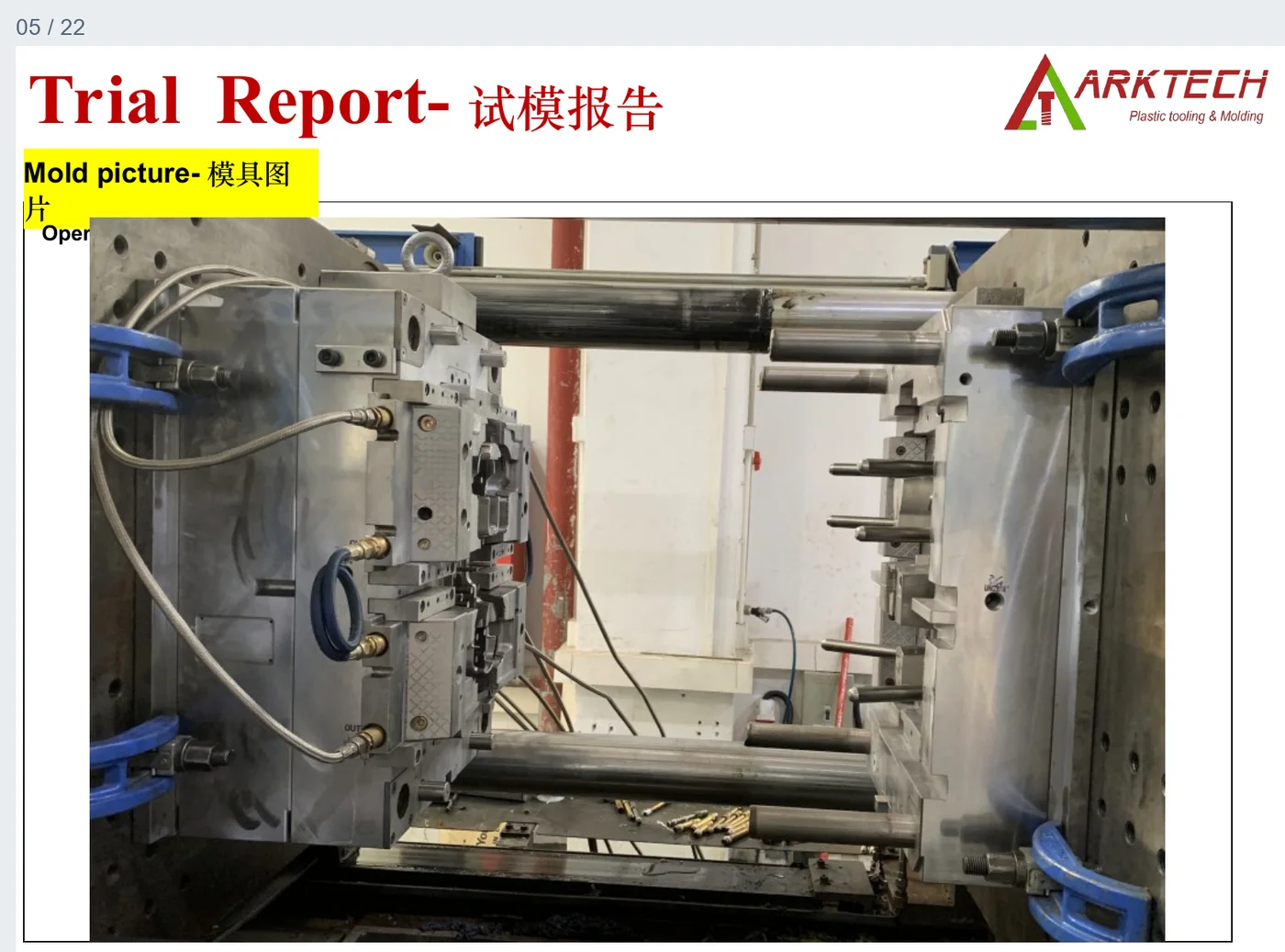
Trial & Validation
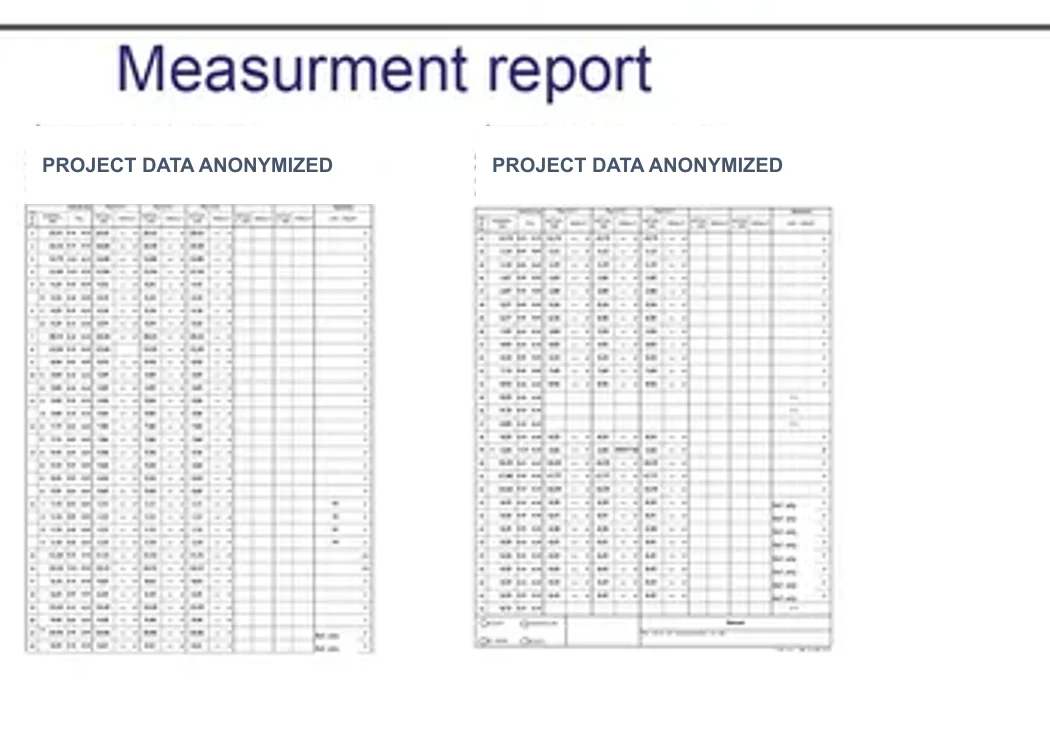
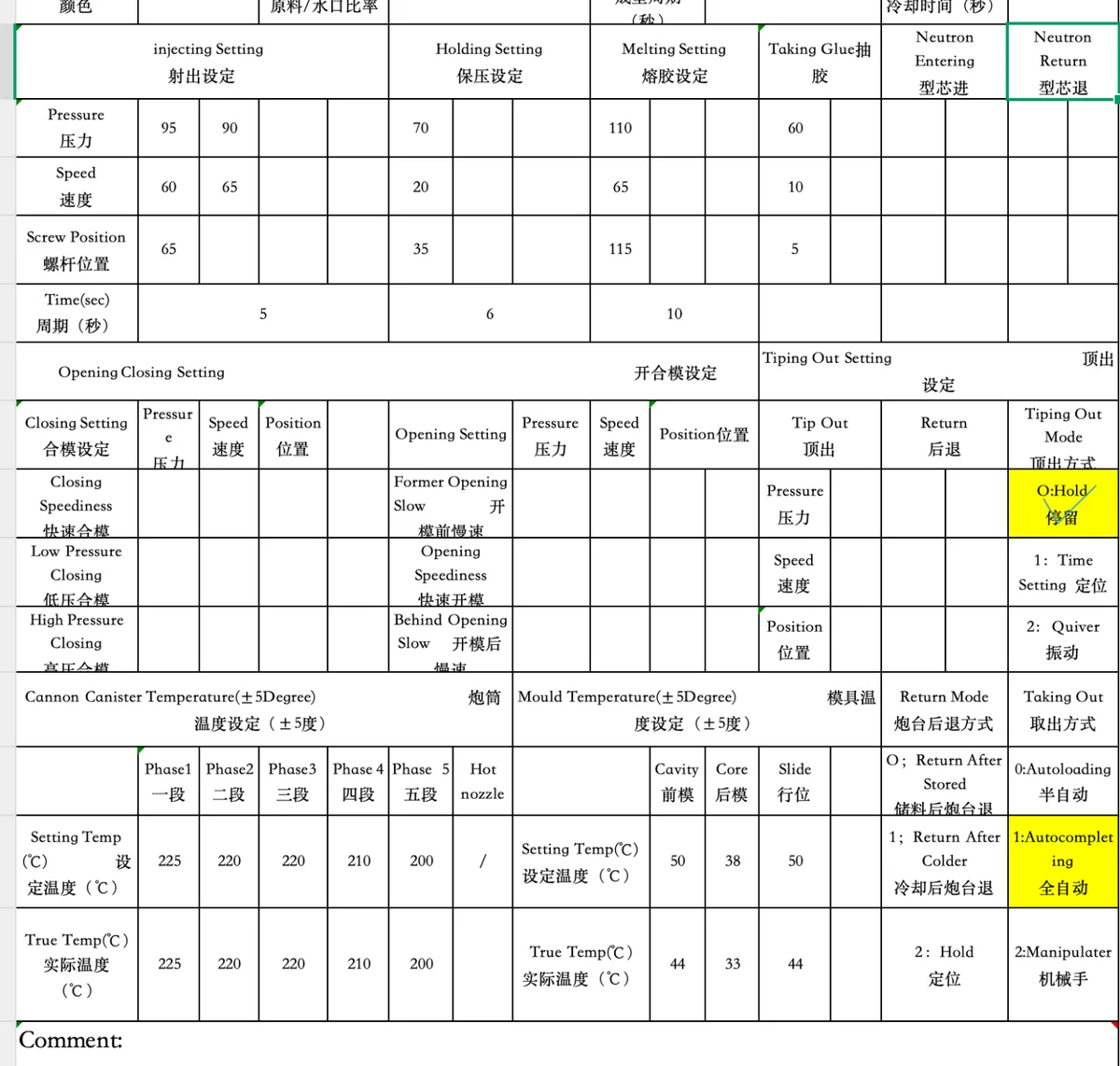
Mold trials connect the approved engineering direction with molded samples, recorded process conditions, dimensional results and required corrections before production release.
Start an Engineering Review
Share the available product and project information so the engineering team can understand the part, its function and the intended manufacturing requirements.
3D product data in a supported CAD format.
Critical dimensions, tolerances and inspection requirements where available.
Resin grade or material requirements.
Texture, polish, cosmetic surfaces and visible areas.
Expected quantities and production requirements when available.
Mating parts, interfaces and critical functional areas where relevant.
Choose the Right Review
DFM and Moldflow support different engineering decisions. Moldflow can be used where deeper simulation is required; it does not replace the broader product and tooling review.
Related Capabilities
Engineering Resources
FAQ
Injection molding engineering connects product requirements, DFM, moldability, Moldflow when required, mold concept, detailed mold design and validation before production.
DFM should be completed before detailed mold design and steel cutting, while product and tooling decisions can still be reviewed efficiently.
Provide the available 3D CAD data, 2D drawings, material, appearance, assembly, functional and production requirements.
The scope can include geometry, draft, undercuts, parting, gating, ejection, mold actions, critical dimensions, appearance and assembly interfaces.
DFM is the broader product and tooling review. Moldflow is a process simulation used when filling, pressure, weld lines, air traps, packing or warpage risks require deeper analysis.
No. Moldflow can be used when part geometry, material, flow length, gating or performance risk justifies deeper simulation.
Arktech can review, evaluate and discuss practical geometry options with the customer. Product-design approval remains with the customer.
After the agreed product and tooling decisions are confirmed, the project can move into detailed mold design, steel cutting, manufacturing and trial validation.
Engineering findings can be checked against trial samples, molding parameters and dimensional results, with corrections reviewed when required before approval.
Engineering Before Tooling
Send your CAD files, drawings, material and project requirements so the engineering team can review moldability and tooling risks before mold design begins.