Substrate Positioning
Locate the first part repeatably and resist second-shot pressure.
Injection Mold Type
Overmolding tools position a preformed substrate for a subsequent molding operation that adds grip, sealing, protection or another functional material layer.
What Makes This Tooling Different
Unlike a dedicated 2K sequence, overmolding commonly treats the substrate as a separate loaded component. The tool must control its position, withstand second-shot pressure and seal the material boundary without damaging the first part.
This tooling route should be selected from the part, material, production demand and receiving-machine requirements—not from a category name alone.
Selection Criteria
Pre-molded plastic or metal substrate with a second material
Soft-touch, sealing, impact or grip functions
Programs where manual or transfer loading is practical
Type-Specific Engineering
Locate the first part repeatably and resist second-shot pressure.
Review chemical compatibility, mechanical locks and surface condition.
Protect the substrate while sealing the overmold boundary.
Evaluate distortion, reheating and dimensional variation before the second shot.
Critical Tooling Topic
The interface must balance bonding, seal geometry, material flow and visible transition requirements.
Substrate datum and loading direction
Mechanical lock or chemical bond
Shutoff pressure and flash risk
Overmold edge and appearance
Real Engineering Evidence
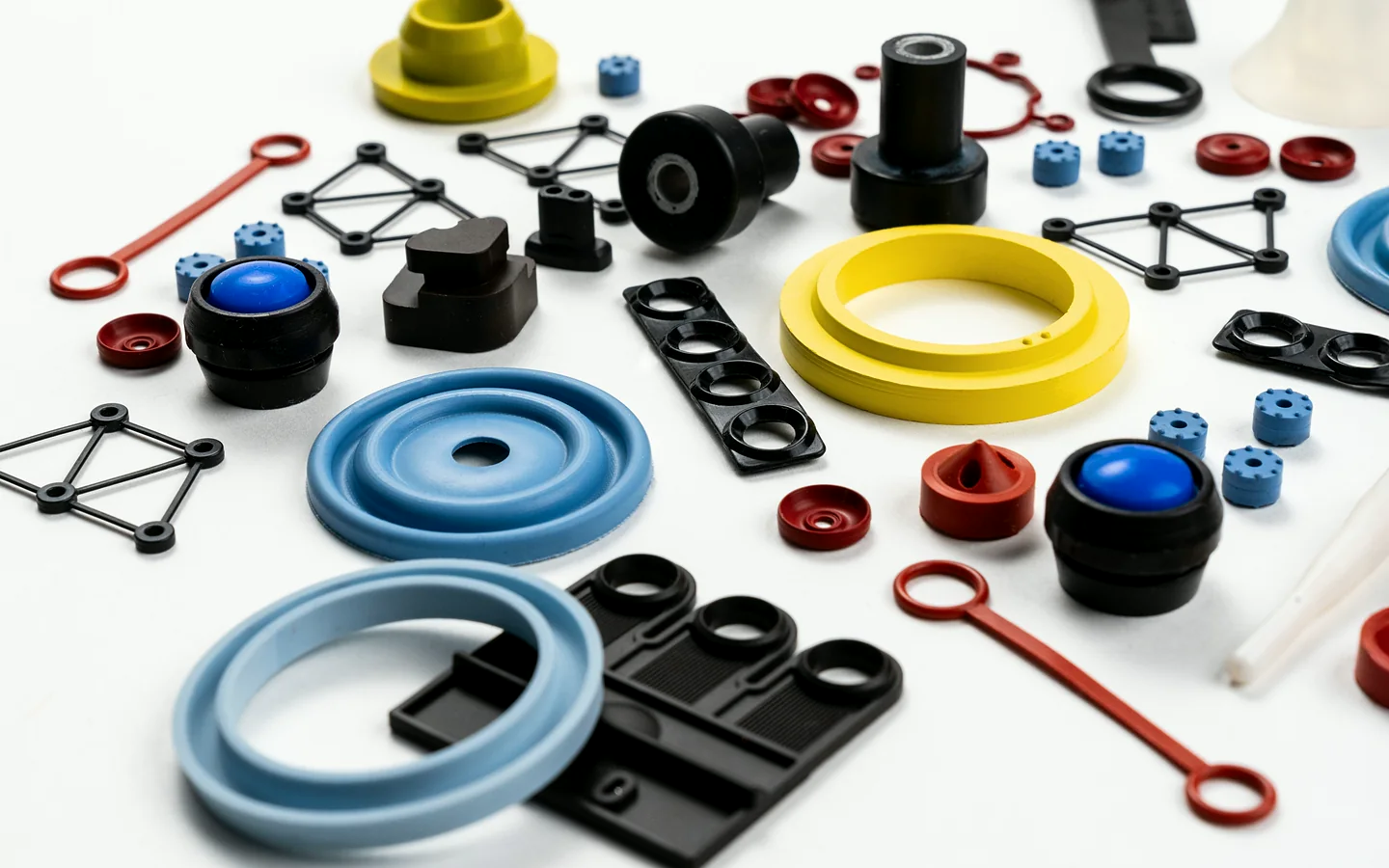
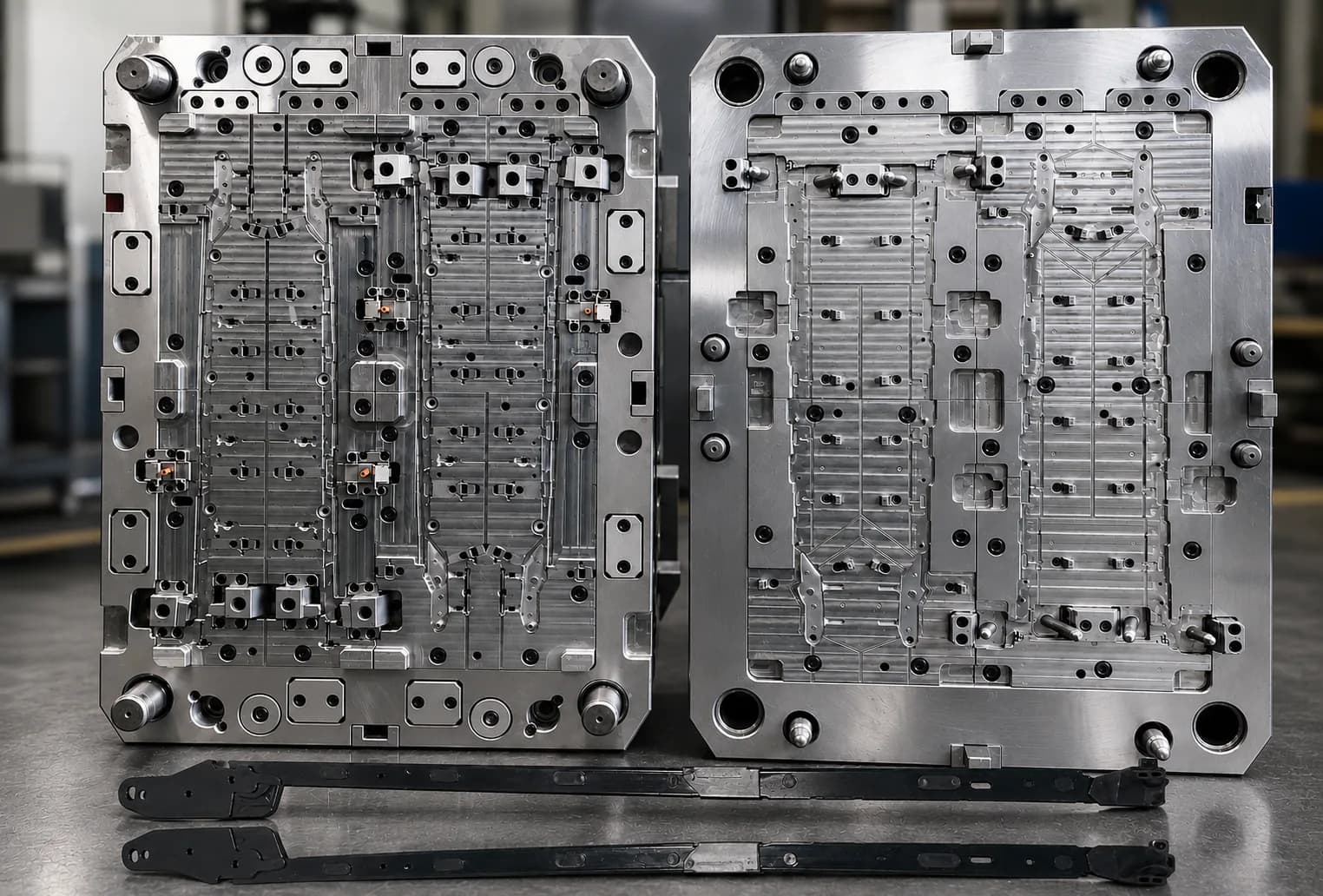
No dedicated verified overmolding mold photograph is available. The hero truthfully shows rigid and soft molded components; the supporting image is labeled only as a real Arktech production mold.
The current visual is intentionally described by what it actually shows; it is not presented as a verified page-specific project.
Trial & Validation
Confirm the first part remains correctly located after molding.
Use agreed peel, pull, sealing or handling checks where required.
Inspect the material boundary and shutoff edges.
Review transition lines, sink, deformation and surface condition.
Related Capabilities
Project Inputs
FAQ
Overmolding commonly uses a separately produced or inserted substrate, while 2K molding coordinates both shots in a dedicated mold and machine sequence.
No. Compatibility, processing window, surface condition and interface design must be reviewed for the specific material combination.
The tool uses locating and support features designed around the actual substrate and injection pressure. Trial confirms movement and deformation risk.
Typical checks include substrate location, flash, bonding or mechanical retention, dimensional condition, appearance and the intended product function.
Start Your Tooling Review
Send your CAD data, material, volume and receiving-machine requirements for DFM review and tooling quotation.