
DFM & Plastic Part Design
Undercut Design for Injection Molded Parts
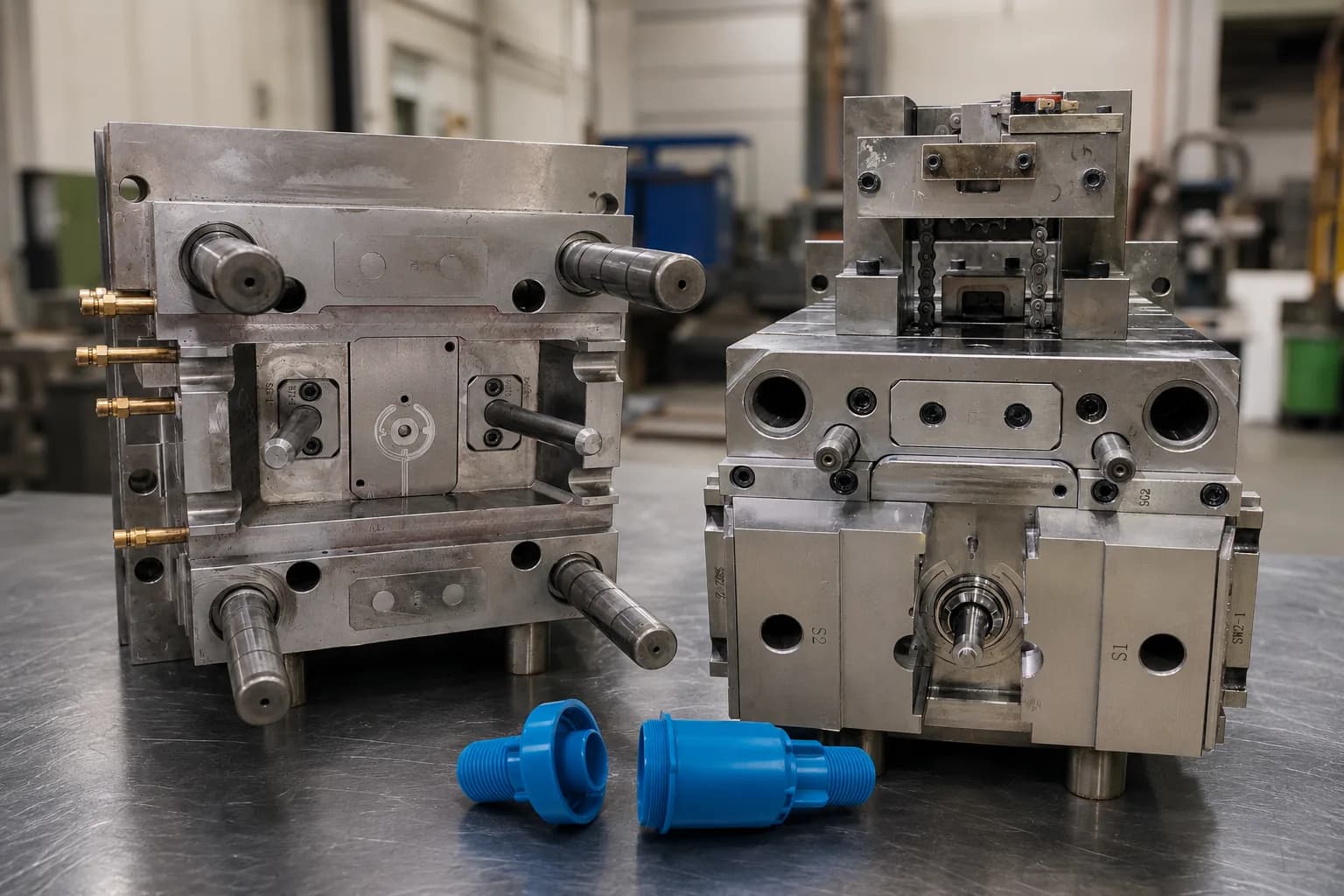
Compare sliders, lifters, unscrewing actions, inserts and geometry changes for internal, external and threaded undercuts.
Short Answer
What engineers need to know
An undercut prevents straight-line part release. The right solution depends on feature direction, travel, part flexibility, production volume, appearance, tolerance and acceptable mold complexity.
Identify every blocked pull direction
Compare geometry changes before adding actions
Select the simplest reliable mechanism
Plan wear and maintenance
Classify the undercut
External features often suit sliders, internal features may suit lifters, and threaded features may require collapsible or unscrewing mechanisms.
Consider product redesign
A shutoff, access opening, split feature or assembly change can sometimes remove a tool action while preserving function.
Engineer the motion
Travel, locking, guidance, timing, lubrication and replaceable wear areas must be resolved before mold manufacture.
Continue the Engineering Review
Related Topics & Project Evidence
Engineering FAQ
Questions about undercut design
When should undercut design be reviewed?
Review undercut design before detailed mold design and steel cutting, while product geometry and tooling decisions can still be discussed efficiently.
Can one rule be applied to every undercut design project?
No. Resin, part geometry, appearance, tolerance, production volume and molding conditions must be evaluated together for the specific project.