Gas Channel Design
Define intentional paths and wall transitions around the desired penetration.
Injection Mold Type
Gas-assisted tooling uses a controlled gas channel during filling to support selected thick or structural geometry while reducing uncontrolled sink and material concentration.
What Makes This Tooling Different
The gas path, polymer front and part wall design must be developed together. Results depend on actual geometry, resin and equipment, so gas assistance should not be treated as a generic solution for every thick part.
This tooling route should be selected from the part, material, production demand and receiving-machine requirements—not from a category name alone.
Selection Criteria
Structural parts with intentional hollow channels
Geometry where sink and weight require deeper process review
Programs with suitable gas-assist molding equipment
Type-Specific Engineering
Define intentional paths and wall transitions around the desired penetration.
Coordinate polymer fill, switchover and gas pressure for the actual part.
Place polymer gates and gas inlets around flow and appearance requirements.
Review gas fingering, hesitation and witness marks on visible zones.
Critical Tooling Topic
The engineering target is a controlled internal channel without breakthrough or unstable visible defects.
Intended hollow section
Polymer flow front
Gas inlet and overflow concept
Equipment and pressure-control interface
Real Engineering Evidence
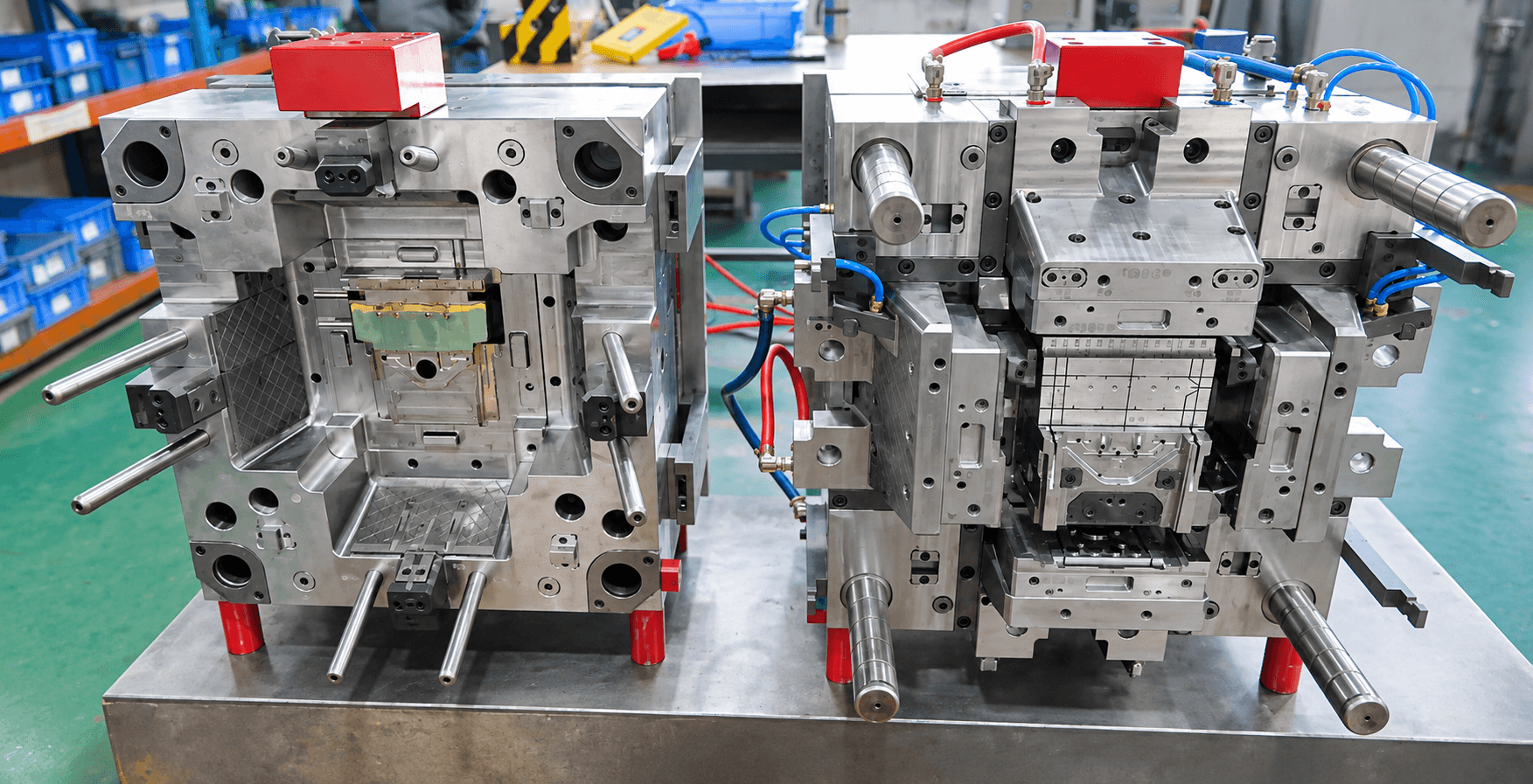
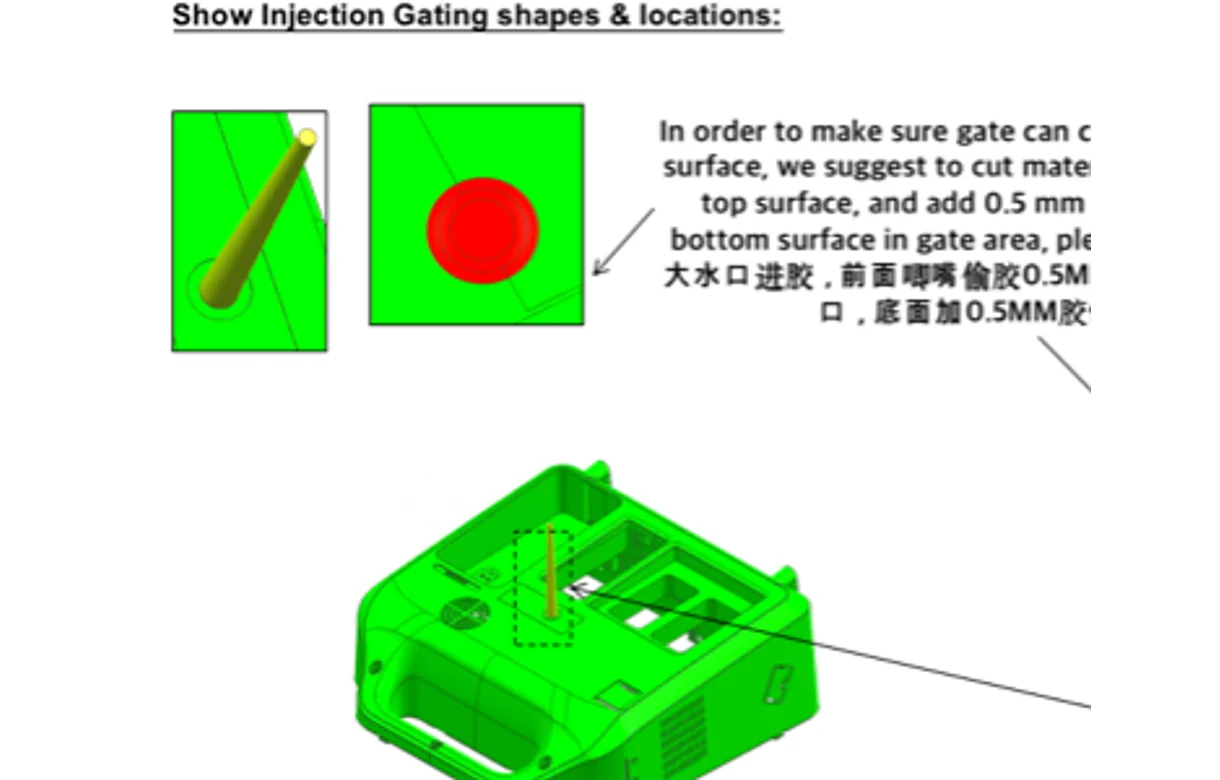
A dedicated verified gas-assisted project photo is not available. The images show a real Arktech mold and factual flow-analysis context without claiming that either depicts a completed gas-assisted project.
The current visual is intentionally described by what it actually shows; it is not presented as a verified page-specific project.
Trial & Validation
Confirm the gas channel follows the intended section.
Inspect sink, gloss and gas-related witness marks.
Review agreed part weight and cut sections where required.
Record injection and gas timing used for approved samples.
Related Capabilities
Project Inputs
FAQ
It is a molding process that introduces controlled gas into selected part sections during filling to form an internal channel and influence material distribution.
No. Geometry, resin, gas path, gate location and process control still affect surface results, and each part needs project-specific validation.
The gas-control system, injection machine, gas interface and available process controls should be confirmed before the tooling concept is finalized.
Methods can include part weight, cut-section review, surface inspection and process records according to the project's actual acceptance requirements.
Start Your Tooling Review
Send your CAD data, material, volume and receiving-machine requirements for DFM review and tooling quotation.